2026 Best Tandem Cold Rolling Mill Features and Benefits?
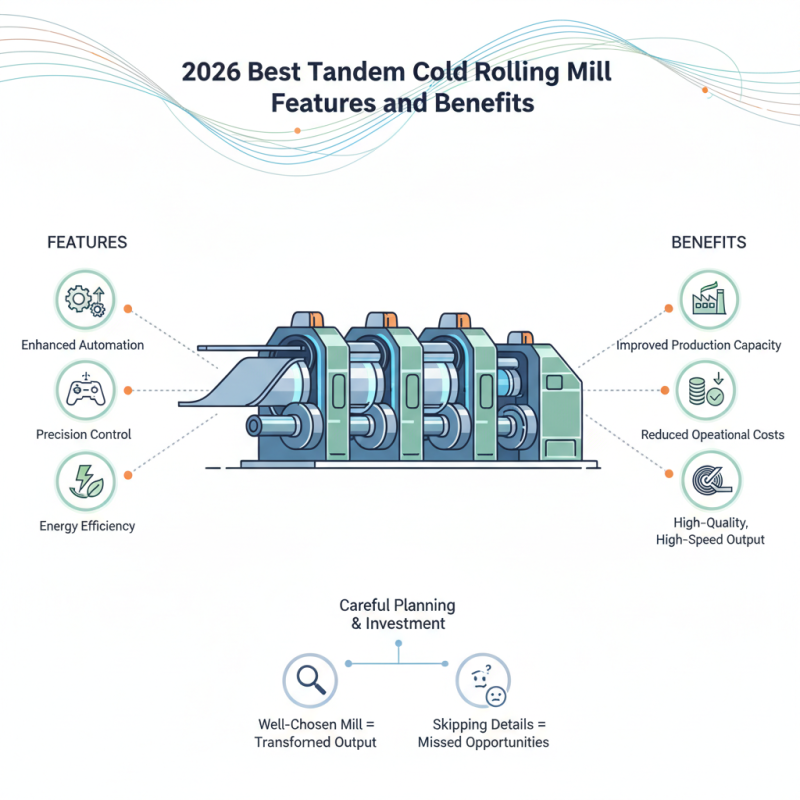
The tandem cold rolling mill is a crucial technology in the metal processing industry. It allows for the efficient production of thin sheets, improving material performance. With advancements in design and engineering, the best tandem cold rolling mills now feature enhanced automation and precision control.
These mills bring several benefits. They improve production capacity and reduce operational costs. The ability to produce high-quality strips at a high speed sets them apart. However, implementing such technology requires careful planning and investment. Companies must evaluate their specific needs before choosing a model.
Not all mills are created equal. Some may have features that don’t align with your production goals. It’s vital to consider aspects like energy efficiency and maintenance requirements. A well-chosen tandem cold rolling mill can transform your output. Yet, skipping these details might lead to missed opportunities. Exploring new technologies is essential. Companies must continually reflect on their processes to stay competitive.
Overview of Tandem Cold Rolling Mill Technology
Tandem cold rolling mills represent a significant advancement in metal processing technology. These systems streamline the rolling process, enhancing efficiency and product quality. The ability to roll multiple thicknesses in a single pass is a game-changer. The result is a thinner, more uniform product, which is crucial in various industries.
Tips: Regular maintenance is key. A well-maintained mill avoids unnecessary downtime and maintains product quality. Check alignment periodically to ensure optimal performance.
This technology allows for precise control over thickness and surface quality. The combination of high-speed operation and multiple stands provides increased output. However, operators must remain vigilant. Minor errors can lead to defects or wastage. Continuous monitoring of parameters is essential.
Tips: Train your staff regularly. Knowledgeable operators can identify issues early. Encourage a culture of proactive maintenance.
While tandem mills offer numerous benefits, they also come with challenges. The initial setup costs can be high. Companies must evaluate their long-term needs. Balancing efficiency with cost-effectiveness is crucial for success.
Key Features of the 2026 Best Tandem Cold Rolling Mill
Tandem cold rolling mills are crucial for producing high-quality metal sheets. A well-designed mill can significantly enhance efficiency and product quality. One of the standout features of the 2026 tandem cold rolling mills is their roll gap adjustment technology. This innovation allows for precise control of material thickness, resulting in better surface finishes and dimensional accuracy. Reports suggest that mills with advanced roll gap controls can reduce thickness variability by up to 25%.
Energy efficiency is another key feature. The latest mills are equipped with energy recovery systems. These systems utilize waste energy during production, which can reduce operational costs by as much as 15%. Furthermore, the implementation of AI-driven predictive maintenance can lower downtime by identifying potential issues before they escalate. However, integrating such technologies can be complex and may require significant initial investment.
Automation capabilities provide additional benefits. The 2026 models often include smart sensors that provide real-time process data. This data is valuable for adjusting operational parameters on-the-fly and improving overall performance. Yet, while automation enhances production speed, it may lead to challenges in workforce adaptability. Training staff to manage more advanced milling systems can require more time and resources than initially anticipated.
Advantages of Using Tandem Cold Rolling Mills in Manufacturing
Tandem cold rolling mills are revolutionizing manufacturing. These mills use consecutive rolls to thin metal sheets effectively. Manufacturers find several advantages in this approach. The process guarantees uniform thickness and improved surface quality. Additionally, it reduces production time significantly.
One key benefit is energy efficiency. Tandem mills consume less energy compared to traditional methods. This efficiency helps companies save costs in the long run. However, some machines may require frequent maintenance. It is essential to stay on top of maintenance schedules to prevent downtime.
Tips: Always monitor the system's performance. Track any fluctuations in output quality. Regular checks can highlight potential issues early.
Another advantage is flexibility. These mills can handle varying material types and thicknesses. However, not all materials perform the same. Certain metals may not yield the desired results. Experimentation is necessary to optimize processes.
Tips: Conduct trials with different materials. Document outcomes to build a library of best practices. Adjust techniques based on findings for continuous improvement.
2026 Best Tandem Cold Rolling Mill Features and Benefits
| Feature | Description | Benefits |
| High Precision | Tandem mills allow for precise control of thickness and tolerances. | Improves product quality and reduces scrap material costs. |
| Increased Efficiency | Multiple rolling steps occur in a single pass of the material. | Speeds up production rates and lowers manufacturing lead times. |
| Energy Savings | Optimized rolling pressures reduce energy consumption. | Decreases operational costs and promotes sustainability. |
| Versatility | Applicable for various materials including steel and aluminum. | Enables production flexibility to meet diverse market demands. |
| Automated Systems | Integration of advanced control and monitoring technologies. | Enhances operational safety and reduces human error. |
Comparison of Tandem Cold Rolling Mills with Other Rolling Technologies
Tandem cold rolling mills offer significant advantages when compared to other rolling technologies. They enhance productivity and efficiency. Studies show that tandem mills can achieve a production increase of 30% compared to traditional mills. This is crucial for manufacturers aiming to meet high market demands while maintaining low operational costs.
The precise control of thickness and shape is another benefit of tandem mills. According to recent industry reports, manufacturers using advanced tandem technology can achieve thickness tolerances within ±0.01 mm. This level of precision is often not attainable with other types of rolling methods. In contrast, older technologies tend to produce more scrap material, leading to increased waste and costs.
However, it’s important to recognize that transitioning to tandem cold rolling technology can present challenges. Initial setup costs tend to be higher due to complex machinery and automation requirements. Moreover, operators need specialized training to handle these advanced systems effectively. Without proper expertise, the risk of operational disruptions increases, which can offset some of the benefits.
Future Trends and Innovations in Tandem Cold Rolling Mill Design
As industries evolve, the tandem cold rolling mill technology is expected to advance significantly by 2026. Innovations in design focus on efficiency and quality. Reports indicate that the market for cold rolling mills is projected to grow at a CAGR of 4.5% from 2023 to 2028. This growth is driven by the demand for thinner and high-strength materials in automotive and aerospace sectors.
Future trends might include the implementation of smart technologies. Integration of IoT and AI can optimize production processes. For instance, predictive maintenance could be employed to reduce downtime by up to 30%. However, challenges remain in the initial deployment of such technologies. Many mills still face issues with data integration and employee training.
Moreover, sustainability is becoming a priority. Industry reports suggest that energy-efficient designs can reduce operational costs by 20%. Utilization of renewable energy sources in tandem mills is a step forward, yet many facilities are hesitant to overhaul existing infrastructures. Striking a balance between innovation and practicality seems crucial as manufacturers navigate these demands.
2026 Trends in Tandem Cold Rolling Mill Productivity and Efficiency
This chart presents the projected productivity and efficiency improvements of tandem cold rolling mills from 2022 to 2026. The data reflects advancements in technology, machinery integration, and operational efficiencies.