Choosing the right led lighting solutions in 2026 requires more than comparing brightness, wattage, and purchase price. Global buyers must examine performance, safety, efficiency, installation conditions, and long-term service support. A reliable solution should fit the project, not merely look impressive in a product catalogue.
This guide explores practical options for warehouses, retail stores, offices, streets, hospitality spaces, and industrial facilities. It considers color temperature, beam angle, lumen output, glare control, dimming, smart controls, and protection ratings. Product certifications and regional requirements also deserve careful review before international procurement. A fixture built for a dry office may fail quickly in a humid coastal warehouse.
Details matter.
Experienced buyers often request test reports, sample units, warranty terms, driver information, and replacement plans. They also check whether suppliers can maintain consistent quality across large orders. Energy savings are important, but the lowest initial price can create hidden costs through poor heat management, uneven light, or early component failure.
No solution is perfect.
Even well-designed lighting can perform differently after installation. Ceiling height, surface color, dust, ambient temperature, and maintenance habits can change the final result. Therefore, this overview balances technical evidence with field experience and realistic purchasing concerns. It also recognizes that market data, regulations, and product technologies continue to change. Buyers should verify current specifications with qualified manufacturers and local professionals before making final decisions. The goal is not to promote one universal product, but to help decision-makers compare dependable options with greater confidence.

2026 Best LED Lighting Solutions for Global Buyers
A leading LED solution now proves more than brightness. It must deliver measured efficacy, stable color, and predictable lifetime. The International Energy Agency reports that lighting uses about 15% of global electricity. Small efficiency gains therefore matter across warehouses, offices, and streets.
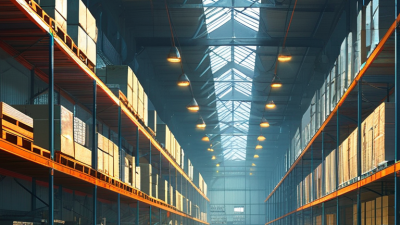
Look beyond the wattage on the box. Request test data for lumens, color consistency, flicker, power factor, and thermal performance. A warehouse aisle may need 4,000K light, low glare, and occupancy controls. A humid parking area may require IP65 protection and corrosion-resistant housing. The U.S. Department of Energy’s solid-state lighting research shows that higher efficacy and better controls remain major energy-saving paths. Pay attention to controls.
Reliability is harder to judge. Ask for LM-80 data, TM-21 projections, surge protection, and warranty conditions. These documents reveal more than promotional claims. In real projects, a failed driver can cost more than the lamp itself, especially when lifts or road closures are involved. Independent laboratory testing adds credibility, but no report removes every risk. Product selection still needs site trials, installer feedback, and careful maintenance planning. Even color temperature preferences deserve review; “cooler” light is not automatically better.
LED lighting markets are moving beyond simple bulb replacement. The International Energy Agency’s Energy Efficiency 2023 report estimated that LEDs represented about half of global lighting sales in 2022. This shift reflects lower energy use, longer service life, and improving control systems. Yet performance differs sharply between laboratory figures and installed products.
The U.S. Department of Energy’s Solid-State Lighting R&D Opportunities report notes that laboratory LED packages can exceed 200 lumens per watt. Complete luminaires usually deliver less. Drivers, optics, heat, and dust reduce real output. A buyer should compare delivered lumens, thermal ratings, color consistency, and warranty terms—not only package efficacy. Small details matter. A poorly ventilated warehouse can shorten operating life.
Connected lighting is another major technology driver. Occupancy sensors, daylight harvesting, wireless controls, and tunable white systems can reduce unnecessary runtime. The International Energy Agency has repeatedly identified controls as an important efficiency opportunity, especially in commercial buildings. Interoperability standards, cybersecurity practices, and local maintenance skills now influence purchasing decisions. A technically advanced system may still fail when replacement parts are unavailable. This is an uncomfortable weakness in many global projects. Buyers should request independent test reports, sample installations, and measured energy data from comparable environments.
2026 Best LED Lighting Solutions for Global Buyers
How to Evaluate LED Products for Different Applications
Choosing an LED product starts with the application, not the highest lumen number. A warehouse needs wide, uniform light, while a museum needs accurate color and controlled glare. Offices may require low flicker and comfortable brightness during long working hours. Outdoor installations demand suitable ingress protection, corrosion resistance, and stable operation in changing weather.
Check the technical data carefully. Compare delivered lumens, beam angle, color temperature, color rendering, and lifetime ratings. Ask whether lifetime means gradual light reduction or complete failure. That detail is often overlooked. Review the driver design, operating temperature range, surge protection, and dimming compatibility. For critical areas, request photometric files and independent test reports. Recognized safety and electromagnetic standards also matter for international purchasing.
I have seen buyers select efficient products that performed poorly because heat was trapped above the ceiling. Thermal management can matter more than impressive packaging. A small test installation reveals glare, shadows, wiring issues, and actual maintenance access. Measure the light on surfaces, not only at the fixture. Calculate energy use, replacement labor, shipping, and disposal costs together. My own evaluations are not always perfect; color preferences and site conditions can change the result. Leave room for adjustment. A reliable supplier should answer technical questions clearly and provide consistent samples, documentation, and after-sales support.
Recommended minimum CRI levels for evaluating LED products across different applications
Color Rendering Index (CRI) indicates how accurately a light source reveals colors. General offices, warehouses, roadways, and residential spaces commonly use CRI 80 or higher, while retail, hospitality, healthcare, and museum applications often require CRI 90 or higher. Buyers should also compare luminaire efficacy, color temperature, glare control, IP rating, operating temperature, lifetime, dimming compatibility, and local electrical certifications.
Values shown are widely used application benchmarks; project specifications and regional regulations may require higher levels.
For global LED buyers, compliance starts with the destination market, not the product photograph. IEC 60598-1 sets core luminaire safety requirements, while IEC 62471 addresses photobiological risks. Electromagnetic compatibility should be checked against CISPR 15 and related regional standards. The IEC CB Scheme can simplify cross-border testing, but national approvals may still apply.
Energy performance needs measurable evidence. The IEA’s Energy Efficiency 2023 report estimates that lighting uses about 15% of global electricity. Efficient LEDs can reduce consumption, but wattage alone proves very little. Request tested efficacy in lumens per watt, power factor, standby power, lifetime, and lumen maintenance. For European sales, buyers should review Ecodesign requirements, energy-label rules, RoHS obligations, and EPREL registration where applicable. Other markets may require local safety marks, import documents, or grid compatibility tests.
Details matter. A warehouse luminaire should show its operating temperature range, surge protection, IP rating, and photometric file. A coastal installation may need stronger corrosion protection than an indoor office. In practical tenders, some datasheets still hide flicker results or test conditions. That is a weakness. Ask for reports from accredited laboratories, calibration records, and certificates matching the exact model. A perfect global specification is unrealistic. Requirements change, and suppliers sometimes interpret them too loosely. The buyer must verify every claim before shipment.
2026 Best LED Lighting Solutions for Global Buyers
Global buyers need more than high lumen figures when sourcing LED lighting. A reliable process starts with the application, not the catalog. Check beam angle, color temperature, CRI, dimming method, and operating hours. A warehouse may need wide, uniform light, while a hotel may require warmer tones and low glare. Request production samples before approving a large order. Measure light output after thermal testing. Small differences often appear after several hours of operation.
Customization should be documented in a clear technical file. Include housing material, driver specifications, cable length, packaging, logo placement, and target color tolerance. Ask suppliers how they control batch consistency. I prefer written inspection points and retained samples. They reduce arguments later. However, customization can increase minimum order quantities and tooling costs. Buyers sometimes underestimate this trade-off. I have seen attractive prototypes become expensive once packaging and testing were added.
Supply chain planning deserves equal attention. Confirm component availability, production capacity, inspection dates, and realistic lead times. Keep safety stock for seasonal demand, especially when shipping routes become crowded. Evaluate more than one qualified supplier, but do not switch factories without repeating key tests. Verify electrical safety documents and market-specific compliance requirements before shipment. Use carton drop tests for fragile fixtures. No forecast is perfect. A stronger plan still needs room for delays, design changes, and one uncomfortable question: what happens if the main supplier stops production?
| Solution Category | Key Buying Dimension | Typical Market Specification or Range | Recommended Verification Point | Buyer and Supply Chain Consideration |
|---|---|---|---|---|
| Commercial Downlights | Typical efficacy | Approximately 90–130 lm/W for mainstream products; premium products may exceed this range. | Request LM-79 or equivalent photometric test data and verify delivered lumens, not only LED-chip efficacy. | Suitable for offices, retail areas, hotels, and public buildings. Confirm ceiling cut-out sizes before finalizing tooling or private-label designs. |
| Linear and Panel Lighting | Color rendering | CRI 80+ is common for general commercial use; CRI 90+ is preferred for retail, hospitality, healthcare, and color-sensitive applications. | Check the complete luminaire's CRI and R9 performance at the selected color temperature. | Higher-CRI versions can have different efficacy, pricing, and lead times. Keep the optical and electrical specifications consistent across production batches. |
| Industrial High Bays | Common power range | Approximately 100–240 W, with output commonly selected according to mounting height, aisle layout, and required illuminance. | Review a lighting calculation based on mounting height, spacing, reflectance, and target lux level. | Confirm operating temperature, surge protection, suspension accessories, and warehouse packaging requirements before shipment. |
| Outdoor Floodlights | Ingress protection | IP65 is commonly used for dust-tight and water-jet protection; IP66 provides stronger water-jet protection for exposed locations. | Verify the tested IP rating for the assembled luminaire, including cable glands, connectors, and housing joints. | Specify mounting brackets, aiming adjustment, corrosion resistance, cable length, and local outdoor electrical requirements. |
| Street and Area Lighting | Optical control | Asymmetric road-lighting distributions are commonly used to direct light toward lanes and reduce unnecessary upward or behind-the-pole spill. | Request verified photometric files such as IES or LDT and review glare, uniformity, and light-spill performance. | Pole spacing, mounting angle, road width, and local lighting regulations should be finalized before selecting the optical lens. |
| LED Strip Systems | Voltage and density | 12 V and 24 V systems are widely used; 24 V is often preferred for longer runs because voltage drop is generally easier to manage. | Check wattage per meter, maximum continuous run, required aluminum profile, and voltage-drop calculations. | For customization, define LED spacing, cut points, adhesive backing, IP rating, reel length, and connector format in the purchase specification. |
| Smart Lighting | Control compatibility | DALI-20–10 VBluetooth MeshZigbee | Confirm interoperability, gateway requirements, commissioning software, cybersecurity practices, and firmware update procedures. | Avoid locking the project to a proprietary ecosystem unless long-term support, replacement products, and data ownership are clearly defined. |
| Emergency Lighting | Backup duration | Common project requirements include 1 hour or 3 hours, depending on the applicable building and fire-safety rules. | Verify battery capacity, charging time, emergency output, self-test function, and test results at the required ambient temperature. | Battery type, replacement availability, storage conditions, and transport restrictions should be included in the supply plan. |
| Color Temperature | CCT options | 2700–3000 K for warm environments, 3500–4000 K for neutral commercial spaces, and 5000–6500 K for cooler visual environments. | Define nominal CCT, tolerance, color consistency, and binning requirements in the technical agreement. | Use one approved color bin for the entire project where visual consistency is important. Request samples before mass production. |
| Flicker Performance | Driver quality | Flicker depends mainly on driver design, dimming method, input conditions, and load level; it should not be inferred from LED type alone. | Request flicker measurements covering percentage flicker and flicker index or a relevant recognized test method. | For offices, studios, sports venues, and camera-facing areas, specify flicker limits and test conditions before approval. |
| Electrical Safety | Input requirements | Common global product designs support 100–277 V AC or 220–240 V AC, depending on the intended market and product architecture. | Match input range, frequency, earthing method, surge protection, power factor, and local conformity requirements to the destination country. | A product certified for one market may not automatically satisfy another market's installation or documentation requirements. |
| Certifications and Compliance | Typical documentation | CERoHSEMCSafety Test Reports | Verify certificate scope, model numbers, test standards, report dates, and whether the documents apply to the final assembled product. | Destination-country requirements should be checked before production. Do not rely only on logos printed on packaging or product labels. |
| Customization | Common customization items | Housing color, dimensions, optics, cable length, connectors, branding-free packaging, CCT, CRI, dimming, and mounting accessories. | Use an approved drawing, bill of materials, golden sample, artwork file, and change-control process. | Tooling, minimum order quantities, sample approval, and engineering-change charges should be agreed before issuing a purchase order. |
| Production Planning | Indicative lead-time structure | Samples commonly require about 7–21 days; standard production may require about 20–45 days after approval, subject to order size and component availability. | Obtain a written schedule covering component reservation, sample approval, production, inspection, packing, and dispatch. | Custom tooling, special drivers, non-standard LEDs, and certification work can extend the schedule. Add a buffer for peak-season demand. |
| Quality Control | Recommended inspection stages | Incoming-material inspection, in-process checks, aging or burn-in where applicable, final visual inspection, electrical testing, and packing verification. | Define acceptance criteria, sampling level, defect classification, test equipment, and corrective-action timing. | A third-party pre-shipment inspection can reduce shipment risk, but it does not replace product design validation or factory process control. |
| Packaging and Logistics | Shipment efficiency | Carton dimensions, stacking strength, product protection, and volumetric weight directly affect damage risk and freight cost. | Approve packaging samples and verify carton markings, pallet configuration, drop protection, moisture control, and spare-part packing. | For international delivery, compare total landed cost rather than unit price alone, including freight, duties, insurance, inspection, and local handling. |
| Warranty and After-Sales | Commercial structure | A written warranty commonly defines a period, operating conditions, exclusions, remedy method, and evidence requirements. | Clarify failure-rate handling, replacement policy, spare parts, technical support response time, and serial or batch traceability. | Keep approved samples, test reports, purchase specifications, and batch records so field issues can be investigated efficiently. |