Best Grow Lights for 2026 Which One Should You Choose?
Choosing the right grow lights can feel overwhelming. With many options available, how do you know which ones are best? The market offers various types, each catering to different gardening needs.
Grow lights can significantly influence plant growth indoors. They provide essential light for photosynthesis, especially during winter months. Different plants have unique light requirements. This makes selecting suitable grow lights crucial for your garden's success.
As you explore the best grow lights for 2026, consider factors like energy efficiency and spectrum. Not every light will meet your specific requirements. Reflecting on your gardening goals can lead to smarter choices. Don't settle for the first option you see. Take the time to research and compare. In the end, the right grow lights can transform your indoor garden into a thriving oasis.
Best Grow Lights for 2026: Key Considerations for Selection
When selecting grow lights for 2026, several key factors should be considered.
Light spectrum is crucial. Plants thrive under specific wavelengths.
A balanced spectrum promotes photosynthesis, enhancing growth and yields significantly. A recent industry report noted that
the right spectrum can boost growth rates by up to 30%.
Another aspect is energy efficiency. Many growers are shifting to LED lights.
They consume less power and have longer lifespans. The global market for LED grow lights is expected to grow by 20%
annually. This trend reflects a growing awareness of sustainable practices.
Tips: Assess your growing space before making a purchase. Consider light intensity and coverage.
Also, think about heat output. Some lights generate excessive heat, affecting plant health. You might have to adjust
ventilation, which can complicate the setup. It’s easy to overlook these details when buying grow lights.
Reflect on your long-term goals to make a better choice.
Understanding the Different Types of Grow Lights: LED, HPS, and Fluorescent
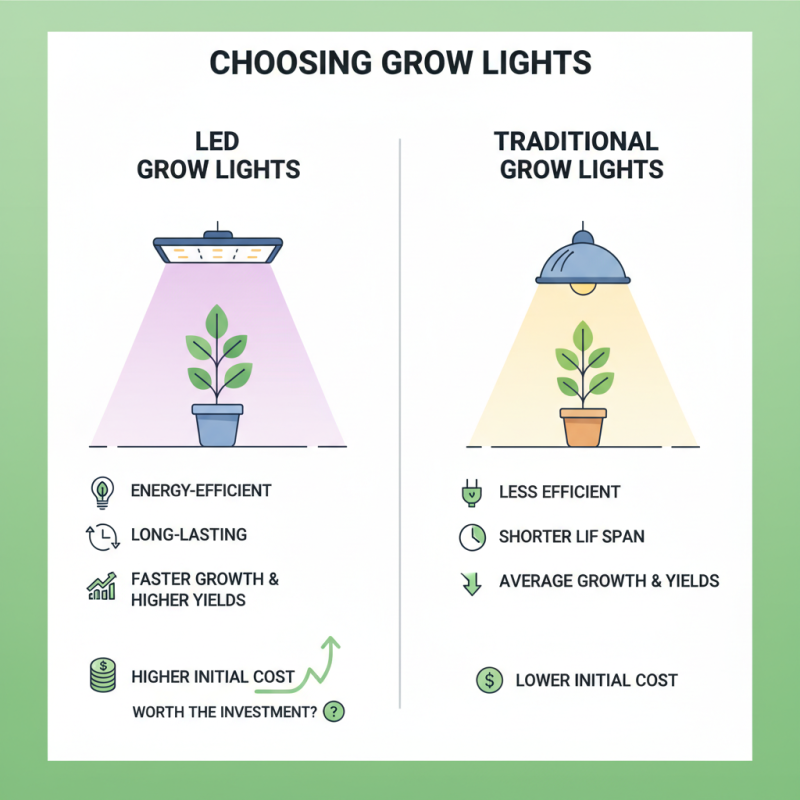
When choosing grow lights, it's essential to understand the options available. LED lights are energy-efficient and long-lasting. They emit a spectrum tailored for plant growth. This can lead to faster development and higher yields. However, the initial cost is often higher. You might wonder if the investment is worth it.
HPS lights are another option. They produce bright light and are commonly used in commercial setups. They promote flowering and fruiting effectively. But, they can generate more heat, needing proper ventilation. The lifespan of HPS bulbs is shorter compared to LEDs. You may need to replace them more often, which adds to expenses.
Fluorescent lights are suitable for beginners. They are affordable and easy to use. These lights work well for seedlings and young plants. However, their intensity may not be enough for larger plants. This could limit growth and yield. Your choice ultimately depends on your specific needs and setups. Consider how much space you have and what type of plants you are growing.
Evaluating Grow Light Efficiency: Watts, Lumens, and PAR Measurements
When choosing grow lights, understanding efficiency is vital. Watts indicate energy consumption. More watts often mean more power, but that isn’t always better. A light can consume many watts but provide low photosynthetic active radiation (PAR).
Lumens measure visible light output. Not every plant needs the same lumens. Some thrive in low light. Knowing your plants' needs is crucial. A light with high lumens might not suit shade-loving plants. Measuring PAR can guide you more effectively. It shows how much light is available for photosynthesis.
Consider your space. A small area might not need intense lights. Overkill can lead to heat issues. Think about how fixtures fit your plants. The wrong light can impede growth. Look for flexibility in light settings. This way, adjustments can be made easily.
Best Grow Lights for 2026: Efficiency Comparison
Top Rated Grow Lights of 2026: Performance Comparisons and Reviews
When choosing grow lights for 2026, performance is key. Light emission spectrum plays a crucial role in plant growth. Full-spectrum lights mimic sunlight, helping plants thrive indoors. Understanding your plants’ specific needs helps in selecting the right light type. For instance, leafy greens may require different wavelengths compared to flowering plants.
Heat production is another factor to consider. Some lights generate a lot of heat. This can be a problem for delicate seedlings. Opt for fixtures with built-in cooling systems to avoid overheating. Also, think about energy efficiency. While some lights may be more expensive upfront, they can save money long-term on electricity bills.
Choosing the right intensity matters too. Too strong a light may cause stress. Conversely, under-lighting can stunt growth. Many growers face this challenge. They often experiment with different heights and durations. Each adjustment deserves reflection. Tracking your plants' responses helps you fine-tune your setup effectively.
Future Trends in Grow Light Technology: Innovations on the Horizon
As we look ahead to 2026, grow light technology is on the brink of exciting innovations. The market for these lights is expected to reach $4.7 billion by 2026, driven by advancements in LED technology. Researchers predict that future grow lights will use more energy-efficient designs, drastically reducing power consumption. Expect smarter lights that integrate with IoT, allowing real-time monitoring and control.
An important trend is the use of spectrally tunable lights. These lights can adjust their light spectrum based on plant needs. This not only promotes better growth but also enhances flowering and fruiting stages. A study reported that plants exposed to optimized light conditions can grow 20% faster. Enhanced sensors may also improve the accuracy of light distribution and intensity.
Tips: Choose a light that offers flexibility in spectrum. It will save energy and improve plant health. Experiment with different light heights and intensities as each plant type has unique needs. It’s crucial to monitor plant responses and adjust accordingly; sometimes, less is more. Overexposure can be detrimental, causing stress to the plants.