Choosing the right Police Led Lightbar requires more than comparing brightness or price. Global buyers need dependable warning visibility, durable construction, and compatibility with authorized emergency vehicles. A lightbar may look impressive in a product photograph, yet its real performance depends on beam coverage, mounting stability, heat management, and control quality.
This guide examines ten leading options through practical purchasing criteria. We consider polycarbonate lens strength, weather resistance, flash patterns, power consumption, and installation support. We also review certifications and regional requirements, because vehicle equipment rules differ across countries and jurisdictions. Always confirm approval with local authorities and qualified vehicle technicians before purchase.
Field experience shows that small details matter. A sealed housing can protect electronics during heavy rain. A clear manual can reduce installation mistakes. A low-profile design may lower wind noise on long journeys. These points are easy to overlook.
Brightness is not everything.
We also assess supplier reliability, warranty terms, replacement parts, and technical communication. Some manufacturers publish thorough test data, while others provide only broad claims. That difference deserves attention. However, no ranking can predict every fleet’s working conditions. A rural service vehicle, an urban patrol car, and a roadside response truck may need different solutions.
The following selection offers a balanced starting point for professional buyers. It is not a substitute for local compliance checks or hands-on evaluation. Readers should compare verified specifications, request documentation, and consider total ownership costs before committing to a purchase.
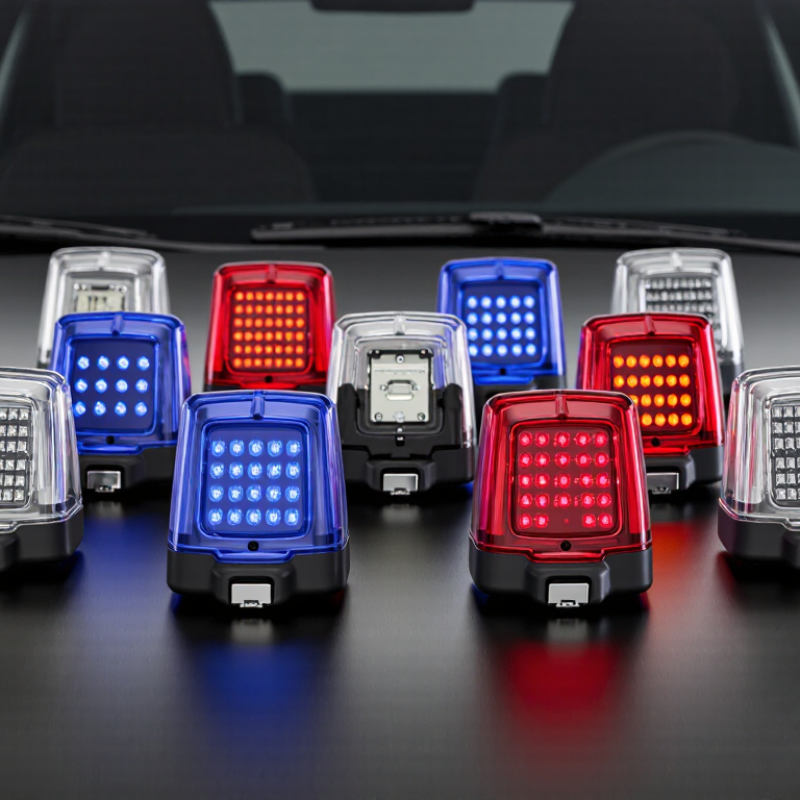
A high-quality police LED lightbar begins with dependable visibility, not excessive brightness. Its light should remain clear in rain, dust, glare, and nighttime traffic. A well-designed bar uses balanced optics, consistent flash patterns, and controlled brightness. This reduces blind spots and unnecessary distraction. The housing should resist vibration, moisture, corrosion, and temperature changes. Look for sealed construction and a durable lens that will not cloud quickly.
Performance also depends on installation and control. A professional lightbar should provide secure mounting, stable wiring, and simple access for maintenance. Independent testing can confirm electrical safety, electromagnetic compatibility, water resistance, and light output. Buyers should request test documents instead of trusting impressive specifications alone. In field use, small weaknesses appear quickly. Loose fasteners, poor cable protection, or heat buildup can shorten service life. I have found that practical reliability often matters more than a longer feature list.
Tips: Check the beam from several angles before purchase. Review the warranty, replacement parts, and service response. Confirm compatibility with the vehicle’s power system and local operating requirements. Ask whether the controller can prevent accidental activation. Keep records of inspections and clean the lens regularly. No product is perfect. A careful buyer should question unclear claims and test the lightbar under realistic conditions before approving wider deployment.

Ten Leading Police LED Lightbars for Global Buyers
The ten leading police LED lightbars usually fall into practical groups: low-profile, full-size, modular, dual-color, traffic-direction, panoramic, interior-mounted, grille-mounted, visor-mounted, and compact utility bars. Each design serves a different vehicle and response environment. Low-profile models reduce wind resistance. Full-size bars provide wider visibility. Modular bars simplify repairs and future upgrades. However, brightness alone is not a reliable buying measure.
SAE J845 and SAE J595 provide useful benchmarks for warning-light performance, photometry, and durability. Buyers should request test evidence, not only marketing claims. IEC 60529 ratings also help compare water and dust protection. An IP67 enclosure, for example, offers stronger environmental protection than an IP54 enclosure. The U.S. Department of Energy reports that LED systems can use up to 75% less energy and last much longer than conventional lighting. That benchmark supports lower electrical demand, but actual lightbar savings vary.
From practical evaluations, I would check flash patterns, nighttime glare, cable sealing, mounting strength, and service access. Poor heat management can reduce output after prolonged operation. It happens. A 2024 global vehicle-lighting market analysis also identifies LED adoption, energy efficiency, and connected control as major growth factors. Still, buyers should verify regional approval requirements before importing. A bar that performs well in one country may not satisfy another country’s color, placement, or flash regulations. Independent photometric reports remain more trustworthy than attractive product photographs.
Choosing a police LED lightbar starts with the vehicle, not the product list. A compact patrol car may need a low-profile bar to preserve clearance under parking structures. Larger SUVs can support wider housings and stronger mounting points. Measure the roof before ordering. I have seen installations fail because the bar looked suitable, but the mounting feet missed the vehicle’s reinforced areas.
Duty requirements matter just as much. Urban patrol work often benefits from wide side visibility and controlled rear lighting. Highway operations may require stronger forward coverage and clear recognition at longer distances. Select flash patterns that support safe communication without creating unnecessary distraction. A brighter bar is not always better. Light output, lens design, beam direction, and nighttime glare must work together.
Check voltage compatibility, current draw, waterproofing, temperature ratings, and cable routing. Confirm that the vehicle’s electrical system can handle continuous operation with radios, cameras, and other equipment. For international buyers, review local approval marks, color restrictions, mounting rules, and electromagnetic compatibility requirements before shipment. Requirements vary widely. Do not rely on a supplier’s general statement alone.
Ask for photometric data, installation instructions, warranty terms, and service support. Test the bar on the actual vehicle, both in daylight and darkness. That step is often skipped. It should not be. Even a well-built lightbar can perform poorly when mounted too low, angled incorrectly, or surrounded by roof equipment. A careful fit protects visibility, reliability, and the vehicle’s working life.
International installation requires more than brightness. Buyers should verify local photometric, color, flash-pattern, and electromagnetic compatibility requirements before ordering. UNECE Regulation No. 65 covers special warning lamps in many markets, while SAE J845 remains influential in North America. These standards are not interchangeable. A lightbar approved in one region may need separate testing elsewhere. Check the vehicle voltage, roof curvature, connector type, and available mounting strength. A perfect fit is uncommon.
Performance claims also need careful reading. The U.S. Department of Energy’s 2023 Solid-State Lighting Status Report records laboratory LED efficacy above 200 lumens per watt, but complete lightbars perform lower after optics, drivers, and thermal losses. Heat matters. IEC 60529 defines IP6X as dust-tight and IPX7 as protection against temporary immersion up to one metre. However, an IP rating does not prove vibration resistance. ISO 16750 environmental testing is more relevant for vehicles, especially with winter salt, roof vibration, and pressure-washer exposure.
Tips: Request compliance documents, EMC test results, and the exact operating temperature range. Inspect cable seals every service cycle. Clean lenses with mild soap, not abrasive solvents. Keep spare fasteners and gaskets. Maintenance intervals should follow field conditions, not only the manual. This is where many fleets underperform. Technicians should record current draw, flash consistency, corrosion, and mounting torque. A short night inspection can reveal glare, weak segments, or an incorrect warning pattern before deployment.