10 Essential Tips for Choosing the Best Solar Lights for Your Home?
Selecting the right solar lights for your home can reshape your outdoor space. As the solar lighting industry continues to grow, it’s projected to reach $3.3 billion by 2025, according to a recent market analysis by Grand View Research. This growth indicates an increasing demand for energy-efficient solutions that blend sustainability with aesthetic appeal.
Expert in solar technology, Dr. Jane Thompson, emphasizes, “Choosing the right solar lights is crucial for maximizing their energy efficiency and longevity.” Her insights remind us that not all solar lights are created equal. Many products on the market offer misleading performance claims. It is essential to look for lights with verified product specifications.
Investing in quality solar lights not only enhances your outdoor ambiance but also contributes to energy conservation. However, understanding the different features available can be overwhelming. It is vital to assess your lighting needs and environment. This ensures that you select products that deliver optimal performance and meet your expectations effectively.
Understanding Different Types of Solar Lights Available for Home Use
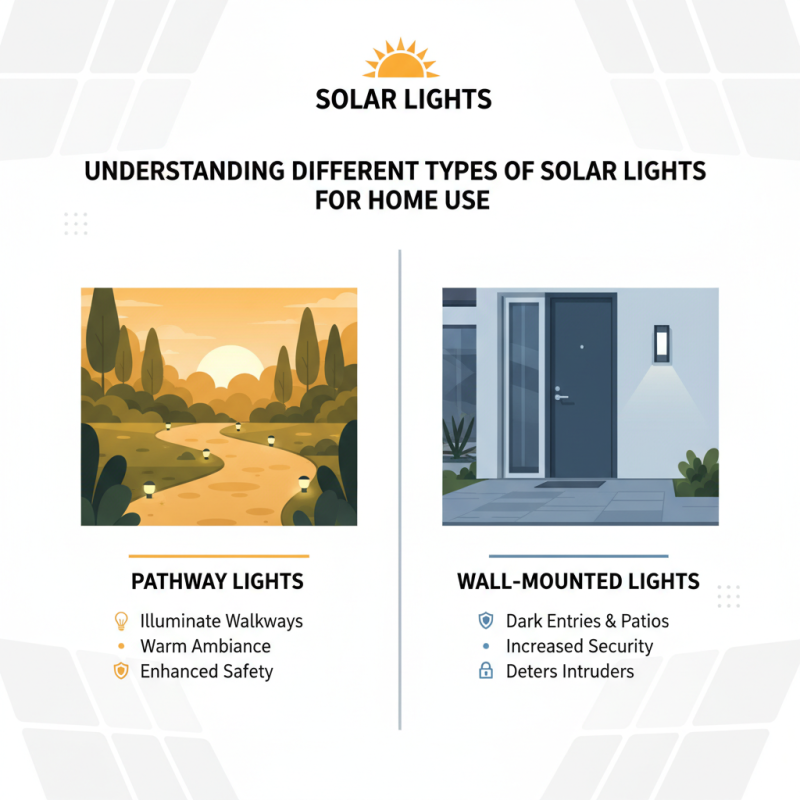
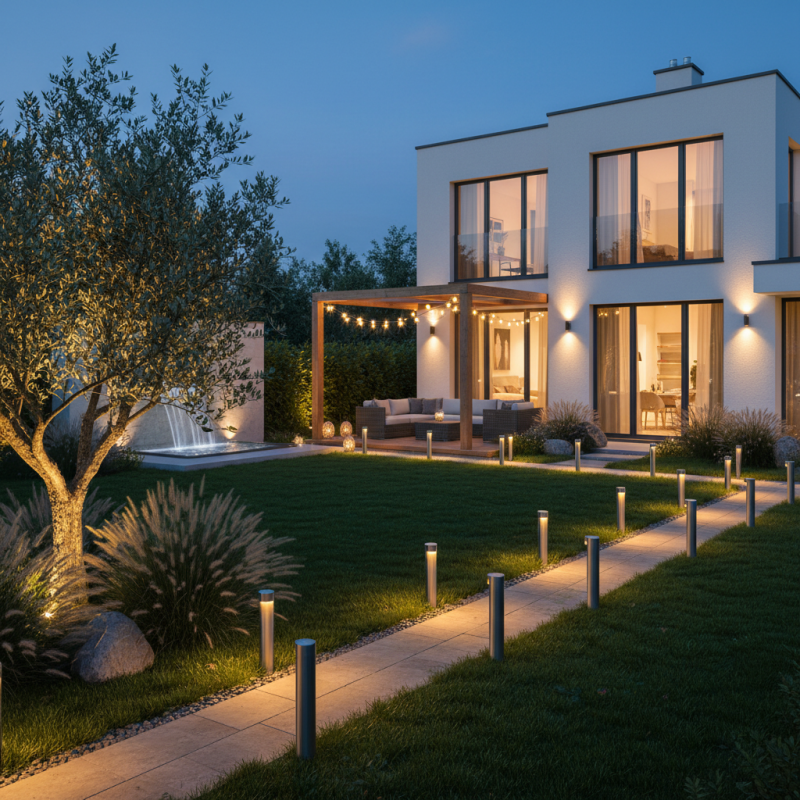
When selecting solar lights for your home, it's crucial to understand the variety of types available. Pathway lights are ideal for illuminating walkways. They create a welcoming ambiance while ensuring safety. Wall-mounted lights, on the other hand, are perfect for dark entries or patios. They can enhance security by deterring intruders.
Garden lights can transform outdoor spaces into enchanting areas. These lights often come in decorative designs and are designed to highlight plants and architectural features. Flood lights provide broader illumination, making them suitable for larger areas. However, consider their brightness carefully; too much light can create a harsh environment.
Solar spotlights serve a different purpose. They focus light on specific objects, which can create a dramatic effect. Many options are adjustable, allowing flexibility in lighting angles. Remember, not all solar lights perform equally in cloudy weather. This inconsistency is something to keep in mind as you choose the best options. Reflect on your specific needs, how often you host outdoor gatherings, and whether you need functional or decorative lighting.
Evaluating Brightness: Lumens vs. Watts in Solar Lighting Options
When it comes to solar lighting options, understanding brightness is key. Brightness is typically measured in lumens, while watts represent energy consumption. More lumens mean brighter light. Therefore, choosing the right emitted lumens is crucial for your needs. A well-lit pathway might need at least 100 lumens. For decorative outdoor lighting, around 20 to 50 lumens may suffice.
Comparing lumens and watts can be confusing. Watts indicate how much power a bulb uses, not how bright it shines. Two bulbs may consume the same wattage but produce different lumens. This discrepancy can be frustrating. It's essential to look for lumens instead of solely relying on watts. By doing so, you ensure your solar lights meet your illumination needs.
Choosing solar lights also depends on placement. Lights along a walkway should provide visibility without overpowering the area. It's easy to overlook the balance between brightness and ambiance. Sometimes, more light isn't always better. Installing lights too bright can create harsh shadows and glare. This reflection may lead to discomfort or safety issues. Evaluating your specific lighting requirements helps avoid these pitfalls and create a harmonious outdoor space.
Assessing Battery Capacity and Solar Panel Efficiency for Longevity
When choosing solar lights, assessing battery capacity and solar panel efficiency is crucial for long-lasting performance. Battery capacity determines how long your lights will run after sunset. A higher capacity usually means more hours of illumination. However, larger batteries may take longer to charge. Aim for a balanced capacity that suits your needs.
Solar panel efficiency is equally important. This metric indicates how well the panel converts sunlight into energy. Higher efficiency panels can generate more power in less time. They are more reliable on cloudy days. You might find that some models use innovative technology to boost their efficiency ratings. Always check specifications to ensure adequate performance.
Consider the lighting duration you require when selecting your solar lights. A fixture with a 2000mAh battery may run up to 10 hours on full charge. If your area gets limited sunlight, prioritize lights with larger solar panels. Ensure that the panels are facing south for maximum exposure. Reflect on your choices and the overall efficiency of the solar lights you want. Making informed decisions opens the door to more reliable outdoor lighting.
10 Essential Tips for Choosing the Best Solar Lights for Your Home
| Feature |
Description |
Importance Level |
Recommended Value |
| Battery Capacity |
Determines how long lights stay powered after sunset. |
High |
2200 mAh or above |
| Solar Panel Efficiency |
How effectively the solar panel converts sunlight to energy. |
High |
15% or higher |
| Light Output (Lumens) |
Brightness of the solar light; higher lumens equals brighter light. |
Medium |
100-300 lumens |
| Weather Resistance |
Ability to withstand rain, wind, and temperature fluctuations. |
High |
IP65 or higher |
| Installation Type |
Ease of setup; options include wall-mounted or stake. |
Medium |
User-friendly |
| Charging Time |
Duration for the battery to fully charge in direct sunlight. |
Medium |
6-8 hours |
| Runtime |
Duration the light lasts on a full charge. |
High |
8-12 hours |
| Dusk to Dawn Sensor |
Automatically turns the light on at sunset and off at sunrise. |
High |
Yes |
| Materials Used |
Quality of materials affects durability and longevity. |
High |
Weather-resistant plastics or metals |
| Warranty |
Duration of guarantee covering defects and performance issues. |
Medium |
1-3 years |
Exploring Weather Resistance Ratings for Outdoor Solar Lighting Solutions
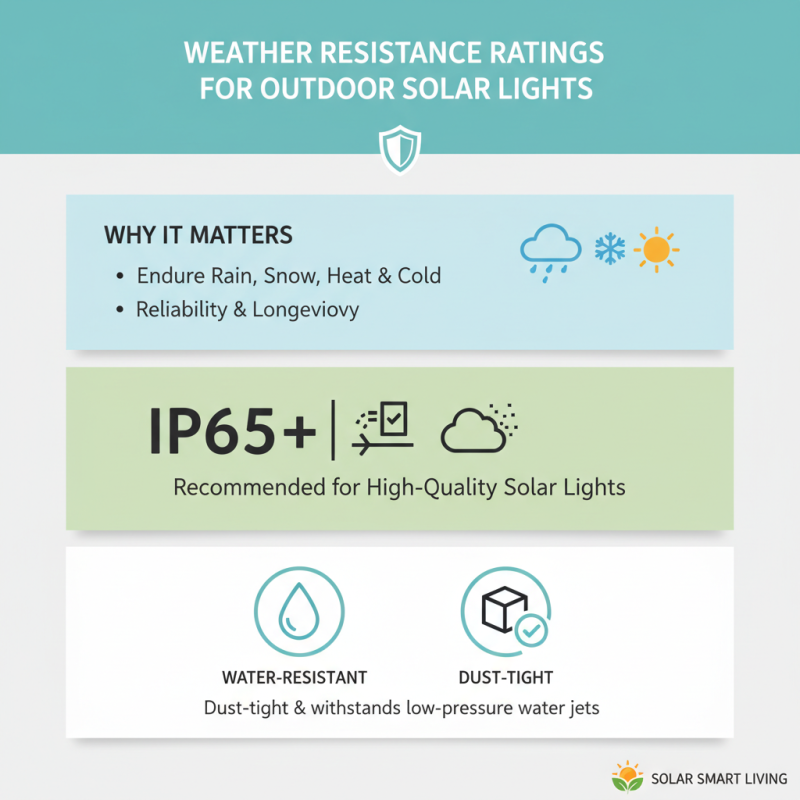
When selecting solar lights for outdoor use, understanding weather resistance ratings is crucial. Solar lights are exposed to various environmental conditions. They need to endure rain, snow, heat, and cold. According to industry data, high-quality solar lights often feature an IP rating of 65 or higher. This means they are dust-tight and can withstand low-pressure water jets.
Consider the location of the lights. Areas with heavy rainfall might require lights rated for water resistance. Look for solar lights that mention "weatherproof" or "weather-resistant." These terms indicate durability against rain and humidity. A report by the Solar Energy Industries Association states that effective solar lights can operate across a temperature range of -4°F to 140°F.
When choosing, pay attention to warranties. A longer warranty often signifies a manufacturer’s confidence in their product. As a tip, avoid lights with vague descriptions of their durability. Instead, search for specific ratings that confirm reliability.
Not all solar lights are built the same way. Some may falter in extreme conditions. It’s important to verify consumer reviews and expert recommendations. Remember, informed choices lead to satisfactory outcomes.
Analyzing the Cost-Effectiveness and ROI of Solar Lights for Homeowners
When considering solar lights for your home, analyzing cost-effectiveness and potential return on investment (ROI) is crucial. Solar lights can reduce electricity bills significantly. Homeowners often overlook the initial installation costs. However, these are typically offset by long-term savings. Choosing efficient solar lights means understanding your energy needs. A detailed assessment allows for better decision-making.
Another factor is the lifespan of solar lights. Many models last up to 25 years. Over this time, homeowners could save hundreds on lighting costs. However, low-quality units may fail prematurely. This can lead to frustration and extra expenditures. It's essential to research the product lifecycle to avoid such pitfalls.
Investing in solar lights also increases property value. A well-lit home appears more inviting. This can attract potential buyers. Yet, not every property may benefit equally. Some locations may require more powerful lighting solutions. Analyzing specific needs and potential benefits is a necessary step for investment clarity.