Choosing the right outdoor lights can shape how a project feels, performs, and ages. A well-planned system does more than brighten pathways. It improves visibility near entrances, highlights landscape features, and supports safer movement after sunset. LED technology offers strong efficiency, long service life, and precise control in these demanding spaces. Still, the best result depends on more than selecting the brightest fixture.
In real installations, details matter. A walkway may need soft, even illumination rather than harsh glare. A garden wall might look better under warm light near 2700K or 3000K. For exposed areas, weather-resistant housings and suitable IP ratings help protect against rain, dust, and seasonal changes. Professional planning also considers beam angle, mounting height, cable routes, drainage, and access for future maintenance. Always check local electrical requirements and follow qualified installation practices.
A common mistake is treating LED outdoor lights as a simple replacement for older lamps. I have seen projects waste energy by using excessive brightness in small spaces. It looked impressive at first. Later, the glare reduced comfort and disturbed nearby rooms. Another concern is product quality, since low-cost fixtures may fade, flicker, or fail sooner than expected. Reviewing tested performance data, warranty terms, color consistency, and supplier experience creates a more reliable decision. LED lights are not automatically perfect. Thoughtful design makes their advantages practical, measurable, and worth the investment.
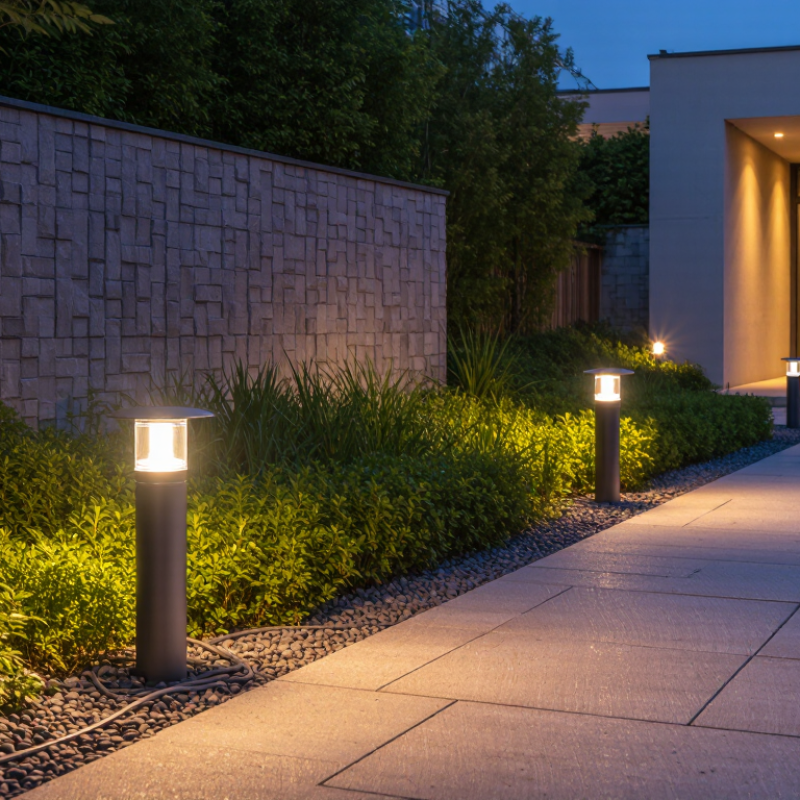
LED outdoor lights are solid-state fixtures designed for paths, façades, parking areas, gardens, and sports spaces. Unlike incandescent lamps, they create light through semiconductor diodes. Common types include floodlights, wall packs, bollards, streetlights, high bays, and landscape spotlights. Each uses different optics and mounting heights.
Core features determine real performance. Look for an IP65 or higher enclosure, suitable color temperature, strong glare control, and a high color rendering index. Photocells, timers, and dimming controls can reduce unnecessary operation. The U.S. Department of Energy reports that LEDs use at least 75% less energy and last up to 25 times longer than incandescent lighting. DLC technical requirements also emphasize efficacy, lumen maintenance, and tested reliability. Still, a lower wattage does not guarantee better illumination. Poor beam selection can leave dark patches on a walkway.
Tips: Match the beam angle to the target area. Test one fixture after sunset. Check mounting height, glare, drainage, and cable protection before full installation. In practical site reviews, installers often discover that excessive brightness creates more discomfort than safety. That deserves a second look. Temperature, dust, vibration, and switching frequency can also shorten service life, despite optimistic product claims. Calibration matters.
Why Choose LED Outdoor Lights for Your Project?
How LED Technology Performs in Outdoor Project Applications
LED technology performs strongly in outdoor projects because it combines efficient energy use with precise optical control. The U.S. Department of Energy reports that LEDs can use at least 75% less energy and last up to 25 times longer than incandescent lighting. For parking areas, pathways, and building facades, this can reduce electricity demand and replacement work. Fewer service visits also matter when fixtures are mounted high or placed near traffic.
Outdoor performance depends on more than wattage. A reliable design should review lumen output, beam distribution, glare, color temperature, and heat management. LEDs operate well in cold conditions, but heat still affects component life. That detail is often underestimated. Look for verified photometric files, LM-80 data, and TM-21 projections when comparing products. The Illuminating Engineering Society identifies these methods as useful tools for evaluating LED lumen maintenance. IP ratings also help confirm protection against dust and water, although installation quality remains critical.
Tips: Match the optic to the task, not the largest lumen package. Use lower color temperatures near homes and wildlife-sensitive areas. Add dimming or sensors where activity changes overnight. The U.S. Department of Energy notes that controls can create additional savings, but poor calibration may cause uneven lighting. Site audits sometimes reveal overlit entrances and dark walkways in the same project. That is a design failure, not an LED failure. Review the space at night.
Why Choose LED Outdoor Lights for Your Project?
Energy Use, Lifespan, and Maintenance Requirements
LED outdoor lights can reduce electricity use because they produce strong illumination with lower wattage. In a parking area, pathway, or loading zone, that difference appears on monthly utility bills. Timers, motion sensors, and photocells can reduce waste further. However, controls need correct adjustment. A light that switches on too often can erase some expected savings.
Many LED fixtures are rated for up to 50,000 hours. That figure is useful, but it is not a promise. Heat, moisture, unstable voltage, and poor airflow can shorten service life. I have seen outdoor lights fail early when water entered through damaged seals. Proper weather protection and careful wiring matter as much as the LED module. Cheap installation can become expensive.
Maintenance is usually simple. Clean lenses remove dust, insects, and salt film that weaken brightness. Inspect gaskets, mounting points, cables, and metal surfaces at least twice a year. Coastal sites may need more frequent checks. Replace damaged seals quickly. Drivers can also fail before the light source, which some project plans overlook. LED systems need less attention, not no attention.
Comparison based on a typical 10,000-lumen outdoor fixture operating 4,000 hours per year. LED generally uses less energy, lasts longer, and requires fewer replacement cycles than conventional outdoor lighting technologies.
Outdoor lighting must protect people before it decorates a site. LED fixtures provide immediate illumination, helping drivers, pedestrians, and workers see steps, edges, and wet surfaces. The U.S. Department of Energy reports that LED lighting can use at least 75% less energy than incandescent lighting and last up to 25 times longer. That reduces maintenance visits, especially around tall poles or restricted areas. Still, brighter is not always safer. Poorly aimed LEDs can create glare, deep shadows, and discomfort for nearby homes.
Weather resistance depends on design, not the word “outdoor.” Look for an enclosure tested under IEC 60529 ingress protection ratings. A suitable rating helps limit water and dust entry, but installation quality remains critical. Drainage, sealed cable glands, corrosion-resistant hardware, and correct mounting angles matter during heavy rain. In coastal locations, salt exposure can attack fasteners quickly. I have seen failures blamed on the fixture when loose connections caused the real problem. That possibility deserves inspection.
Environmental performance also includes operating habits. The International Energy Agency estimates that lighting uses about 15% of global electricity and produces roughly 5% of energy-related greenhouse-gas emissions. Efficient LEDs can reduce demand, but unnecessary lighting still wastes power. Controls, timers, motion sensors, and warm color temperatures can limit energy use and disturbance to wildlife. The choice is not perfect. Cold environments, electronic waste, and difficult recycling routes require attention during procurement. A practical specification should measure energy, service life, glare, recyclability, and local weather exposure together.
| Project Consideration | Relevant LED Outdoor Lighting Data | Practical Project Benefit | Planning Notes |
|---|---|---|---|
| Energy Efficiency | Approximately 80–150 lumens per watt for many modern LED products. | More light can be produced with less electricity than traditional incandescent lighting, which commonly delivers about 10–17 lumens per watt. | Compare complete fixture efficacy, measured in lumens per watt, rather than LED chip specifications alone. |
| Service Life | Typically 25,000–100,000 operating hours, depending on product design, temperature, and operating conditions. | Longer replacement intervals can reduce maintenance visits, lift-equipment use, and labor costs. | Review the rated life, lumen-maintenance value, ambient temperature range, and warranty terms before selection. |
| Outdoor Ingress Protection | IP65: dust-tight and protected against water jets. IP66: dust-tight and protected against powerful water jets. IP67: protected against temporary immersion up to 1 meter for up to 30 minutes under test conditions. | Appropriate IP protection helps protect electrical components from rain, dust, and water exposure. | Choose the rating according to the installation location. IP ratings do not by themselves indicate resistance to impact, corrosion, or salt spray. |
| Operating Temperature | Many outdoor LED fixtures are designed for a broad ambient range, often approximately −40°C to +50°C; the actual range varies by product. | LED systems can perform reliably in cold environments where some conventional lamps may experience slower starting or reduced performance. | Confirm the manufacturer’s declared ambient-temperature range and account for heat buildup inside enclosed fixtures. |
| Electrical Safety | LED fixtures generally operate at lower internal temperatures than incandescent lamps and can be specified with grounding, overcurrent protection, surge protection, and suitable insulation. | Lower surface temperatures can reduce the risk of heat-related contact hazards and nearby material damage. | Use products evaluated to applicable electrical-safety standards and install them with correctly rated cables, drivers, fuses, and disconnects. |
| Surge Protection | Outdoor LED drivers may be affected by switching events and lightning-related transients. Commercial specifications commonly state surge withstand values such as 6 kV or 10 kV, depending on the product and test method. | Additional surge protection can improve reliability in exposed installations. | Check the fixture’s surge rating and consider a site-level surge protective device where lightning or grid disturbances are common. |
| Visibility and Safety | LED fixtures are available in multiple color temperatures, commonly 2,700–6,500 K, and color-rendering values such as CRI 70, 80, or higher. | Correct color temperature and color rendering can support pedestrian orientation, vehicle recognition, and clearer identification of objects. | Select the lowest practical color temperature that meets visibility requirements to help limit glare and unnecessary short-wavelength light. |
| Glare and Light Distribution | Optical systems can provide asymmetric, roadway, area, cutoff, or shielded distributions to direct light where it is needed. | Better control can improve uniformity while reducing glare, light trespass, and wasted upward light. | Use photometric files and lighting calculations to verify illuminance, uniformity, glare control, and property-line spill. |
| Environmental Materials | LED lamps and fixtures generally contain no intentionally added mercury, unlike many fluorescent and compact fluorescent lamps. | End-of-life handling is simpler in relation to mercury-specific disposal requirements. | Electronic components, aluminum, plastics, and other materials should still be recycled or disposed of according to local regulations. |
| Carbon and Energy Impact | Lower electricity consumption can reduce operational greenhouse-gas emissions, but the actual reduction depends on the local electricity-generation mix. | Energy-efficient lighting can support project energy targets and reduce operating costs over its service life. | Estimate savings using local electricity rates, annual operating hours, fixture wattage, controls, and the grid’s emissions factor. |
| Lighting Controls | LED systems are compatible with photocells, timers, occupancy sensors, dimming, and networked controls when the driver and control protocol are compatible. | Dimming and scheduled operation can reduce energy use and limit unnecessary nighttime lighting. | Verify dimming range, minimum load, control compatibility, fail-safe behavior, and commissioning requirements. |
| Maintenance Exposure | Long-life LED systems can reduce relamping frequency compared with shorter-life lamp technologies. | Fewer maintenance interventions can reduce work at height, traffic disruption, and site access requirements. | Plan for eventual driver or fixture replacement, cleaning of optical surfaces, and inspection of seals and cable entries. |
| Lifecycle Assessment | Operational electricity often represents a major portion of outdoor-lighting lifecycle impact, while manufacturing and end-of-life impacts also contribute. | A complete assessment avoids making decisions based only on purchase price or wattage. | Compare purchase, installation, energy, maintenance, replacement, recycling, and disposal costs over the intended project period. |
Data shown are typical planning ranges and technical benchmarks, not guarantees for every product. Final selection should be based on verified photometric data, applicable electrical and lighting regulations, environmental conditions, and a project-specific lifecycle assessment.
Choosing LED outdoor lights starts with the project, not the fixture. A garden path needs soft, low-glare illumination for safe walking. A loading area requires stronger light, wider coverage, and dependable operation. For façades, beam angle matters because narrow beams highlight textures, while wide beams spread light evenly.
Check the site conditions carefully. Measure mounting height, viewing distance, and the area needing illumination. Select a suitable color temperature, such as warm white for hospitality spaces or neutral white for work areas. Confirm the ingress protection rating for rain, dust, and exposed locations. In my experience, many lighting problems come from ignoring drainage and cable placement.
Tips: Compare actual lumen output, not wattage alone. Use shields near windows and neighboring properties. Test one fixture at night before ordering the full quantity.
Control options should match daily use. Motion sensors can reduce unnecessary operation in walkways, while timers suit predictable schedules. For coastal or humid sites, corrosion-resistant housing is important. Also inspect the mounting surface; a powerful light on a weak bracket creates avoidable risk. I once selected a beam angle too narrowly, and the walkway looked bright in one spot but dim elsewhere. That mistake showed why drawings cannot replace an evening test. LED lights can lower energy use and maintenance needs, but performance still depends on correct selection, installation, and cleaning. No single model fits every project.