Why Is CNC Turning Important for Global Buyers?

For global buyers, choosing the right machining process affects cost, quality, delivery, and long-term supply stability. Cnc Turning is important because it creates precise cylindrical parts with consistent dimensions. These parts may include shafts, bushings, pins, fittings, and threaded components. A small dimensional error can cause vibration, leakage, or assembly failure. The risk is real.

Experienced buyers look beyond a low unit price. They examine machine capacity, material control, inspection methods, and production records. A reliable supplier should explain its tolerances clearly and provide measurable quality evidence. This may include coordinate measuring reports, material certificates, first-article inspections, and documented process controls. Factory communication also matters. Clear drawings, revised specifications, and sample approvals can prevent expensive misunderstandings across borders.

Cnc Turning can support efficient production when designs, materials, and volumes match the process. Automated tool paths may reduce repeated labor and improve consistency. However, no supplier is perfect, and no quotation tells the entire story. Surface finish, tool wear, packaging, and shipping conditions can still create problems. Buyers should ask practical questions and test assumptions before placing large orders. A sample part with visible threads, clean edges, and measured diameters often reveals more than a polished presentation. This article explores why Cnc Turning remains valuable for international procurement and how careful evaluation can build stronger, more dependable supplier relationships.
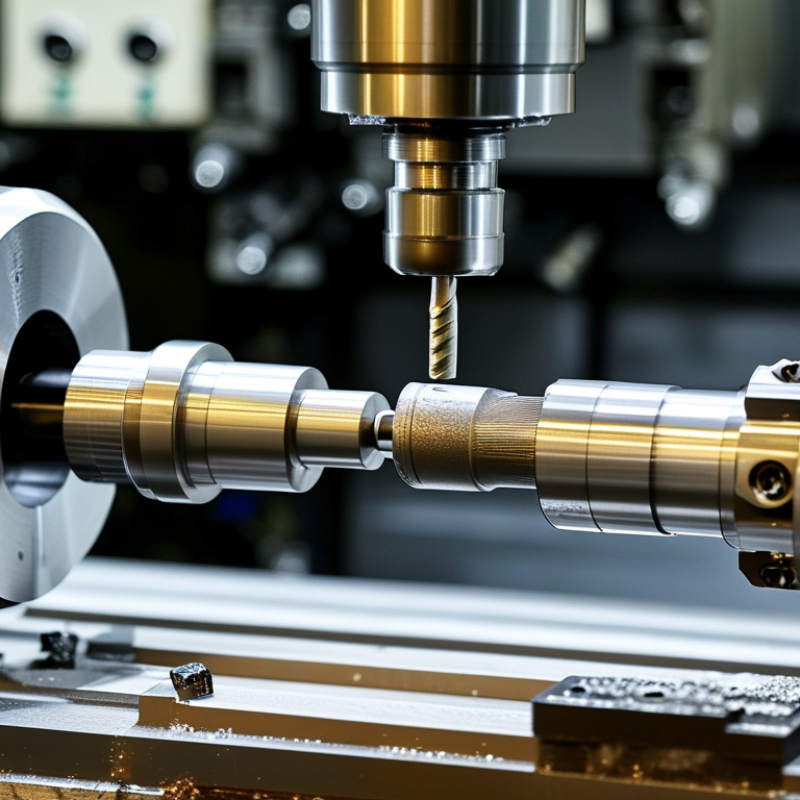
Why Is CNC Turning Important for Global Buyers?

CNC Turning Explained: How Lathe Automation Achieves ±0.01 mm Precision

Why Is CNC Turning Important for Global Buyers?

CNC turning uses programmed toolpaths to rotate a workpiece and remove material consistently. Modern lathes can achieve tolerances near ±0.01 mm under controlled conditions. This level supports shafts, bushings, threads, and sealing surfaces that must fit without force. However, ±0.01 mm is not automatic. It depends on machine rigidity, tool wear, temperature, material, and measurement methods.

A useful detail is thermal growth. A warm spindle can shift cutting results after several hours. Skilled operators therefore check the first-off part, monitor dimensions, and adjust offsets before drift becomes expensive. A tenth part may differ from the first. That matters.

The International Federation of Robotics reported 541,302 industrial robots were installed worldwide in 2023. This figure shows how factories increasingly use automation for repeatable production. CNC turning benefits from the same direction through bar feeders, probing systems, and automatic tool compensation. According to Fortune Business Insights, the global CNC machine market was valued at about 83.77 billion dollars in 2023. Market growth is encouraging, but buyers should inspect capability claims carefully.

Ask for inspection records, tolerance charts, material certificates, and sample measurements. Confirm whether the supplier measures at room temperature. Also check surface finish, concentricity, and thread accuracy. A machine may reach ±0.01 mm on one feature, but not across every dimension. That distinction is easy to miss. Reliable sourcing depends on verified process control, not attractive numbers alone.

Why Is CNC Turning Important for Global Buyers?

CNC Turning Explained: Typical Dimensional Tolerance by Process

CNC turning commonly achieves approximately ±0.01 mm dimensional tolerance under controlled production conditions. This repeatability helps global buyers reduce variation, inspection risk, and assembly problems. Actual results depend on machine condition, material, tooling, part geometry, temperature, and quality-control practices. The values shown are representative industry ranges rather than guarantees.

Key Materials and Part Geometries Supported by CNC Turning

CNC turning matters to global buyers because one process can produce accurate parts across many industries. A rotating bar meets a controlled cutting tool, creating clean diameters, threads, bores, and shoulders. Typical geometries include shafts, pins, bushings, sleeves, nozzles, and threaded connectors. External and internal features can often be completed in one setup.

The material choice changes the machining experience. Aluminum turns quickly and supports lightweight housings. Stainless steel offers corrosion resistance but demands sharper tools and careful heat control. Brass machines smoothly for fittings and small precision parts. Titanium is strong and light, yet it requires slower cutting and stable workholding. Engineering plastics can reduce weight, although heat and deformation need attention. Material certificates and hardness checks help buyers verify consistency between batches.

Geometry still sets practical limits. Long, thin shafts may vibrate, while deep bores can challenge tool access. Very small threads need suitable tooling and close inspection. Tight tolerances are possible, but they can increase cycle time and cost without improving performance. No process is perfect. A drawing may appear simple, yet an awkward corner or excessive length can create avoidable risk. Global buyers should review tolerances, surface finish, material condition, and inspection methods before production. Clear specifications make repeat orders more reliable across different suppliers and regions.

Why Is CNC Turning Important for Global Buyers? - Key Materials and Part Geometries Supported by CNC Turning

Material Family Common Material Examples Key Properties Typical Turned Parts Supported Geometries Buyer Considerations
Aluminum Alloys 6061-T6, 7075-T6, 2024-T3 Low density, good machinability, high strength-to-weight ratio, corrosion resistance varies by alloy. Housings, spacers, shafts, fittings, sensor bodies and lightweight aerospace components. External diameters, internal bores, grooves, chamfers, shoulders, threads and thin-wall sections. Suitable for weight-sensitive designs. Anodizing or other protective finishes may be specified for appearance and corrosion control.
Carbon and Alloy Steels 1018, 1045, 4140, 4340 Good strength and wear resistance; alloy grades can provide improved toughness and hardenability. Drive shafts, pins, bushings, couplings, hydraulic components and mechanical fasteners. Stepped shafts, tapers, deep bores, keyways, grooves, external threads and shoulders. Heat treatment can improve hardness and strength but may affect dimensional stability and machining cost.
Stainless Steels 303, 304, 316L, 17-4 PH Corrosion resistance, durability and suitability for demanding industrial or sanitary environments. Valves, medical components, food-processing fittings, instrumentation parts and marine hardware. Precision bores, threaded fittings, flanges, sealing grooves, cylindrical bodies and contoured profiles. Grade selection should match corrosion exposure. Work hardening and heat generation may require appropriate tooling and cutting conditions.
Brass and Copper Alloys C360 brass, C464 brass, C110 copper Excellent electrical or thermal conductivity; brass generally offers very good machinability. Electrical terminals, valve bodies, nozzles, connectors, bushings and plumbing fittings. Small-diameter parts, fine threads, drilled passages, grooves, knurled sections and turned profiles. Brass is often selected for efficient production of small precision parts. Copper may require attention to burr control and surface finish.
Titanium Alloys Grade 2, Grade 5 (Ti-6Al-4V) High strength-to-weight ratio, excellent corrosion resistance and low thermal conductivity. Aerospace fittings, medical implants, lightweight shafts and high-performance fasteners. Complex shoulders, precision bores, threads, radiused transitions and thin-wall cylindrical parts. Machining is slower and more tool-sensitive than aluminum or brass. Stable workholding and controlled cutting parameters are important.
Nickel-Based Alloys Inconel 625, Inconel 718, Hastelloy C-276 High-temperature strength, oxidation resistance and excellent resistance to aggressive environments. Engine components, chemical-processing parts, turbine hardware and high-temperature fittings. Precision rings, threaded parts, flanges, grooves, bores and complex rotational profiles. Typically involves slower cutting speeds, rigid setups and careful tool selection. Cost and lead time are usually higher.
Engineering Plastics Acetal (POM), nylon (PA), PEEK, PTFE Low weight, chemical resistance, electrical insulation and low friction depending on the polymer. Insulating sleeves, rollers, seals, guides, bushings, manifolds and low-load mechanical components. Large bores, thin-wall rings, threads, grooves, radii and lightweight cylindrical profiles. Thermal expansion, moisture absorption and workholding pressure should be considered when defining tolerances.
Geometry Capability Rotational and mill-turned features Efficient material removal from bar stock, billets or near-net-shape blanks. Round shafts, collars, pins, bushings, nozzles, adapters and custom turned components. ODs, IDs, bores, tapers, steps, radii, chamfers, grooves, knurls, threads, cross-holes and flats. Live tooling and Y-axis or dual-spindle configurations can reduce secondary operations for suitable designs.
Typical Dimensional Control Part-specific; commonly defined in millimeters or inches Repeatable CNC control supports consistent dimensions across production batches. Precision shafts, bearing seats, sealing diameters and mating components. Diameter, length, concentricity, runout, perpendicularity and surface-finish requirements. Exact capability depends on machine condition, material, geometry, tolerance stack-up, inspection method and production volume.
Surface Finish Options As-machined, polished, anodized, plated, passivated or heat-treated Can improve appearance, corrosion resistance, wear resistance or functional performance. Visible housings, sealing surfaces, sliding components and corrosion-exposed parts. Fine bores, smooth shafts, decorative profiles, masked areas and functional contact surfaces. Finish requirements should identify the target roughness, treatment type, masking areas and post-treatment dimensions.

Note: Material behavior, achievable tolerances, surface finish and production economics depend on the alloy or polymer grade, part geometry, machine configuration, tooling, inspection method and quantity.

Production Efficiency: 24/7 Automation and Multi-Axis Turning Capability

Why Is CNC Turning Important for Global Buyers?

Production efficiency often begins with machine availability. In a well-managed CNC turning workshop, automated equipment can run through night shifts with limited operator intervention. This helps global buyers maintain stable output across different time zones. It also reduces delays caused by repeated manual setup.

A bar feeder can supply material continuously, while programmed tool changes keep production moving. Multi-axis turning machines add another advantage. They can perform turning, drilling, threading, and milling in fewer setups. This reduces handling time and improves alignment between features. In practical production, that difference becomes visible on batches with tight tolerances and complex profiles. Less movement means fewer opportunities for positioning errors.

Automation still needs disciplined control. Skilled technicians check tool wear, coolant condition, and dimensional data during production. Inspection records provide useful evidence for buyers who cannot visit the facility regularly. However, 24/7 operation is not automatically efficient. Poor programming or delayed maintenance can multiply defects overnight. There is a trade-off. High utilization may increase output, but it can also expose weak process planning. Experienced suppliers therefore combine machine monitoring with scheduled checks and realistic capacity planning. Small interruptions are easier to manage than a large batch of inconsistent parts.

Global Quality Control: ISO 9001, ISO 2768, and Cpk-Based Inspection

Why Is CNC Turning Important for Global Buyers?

Global buyers need more than a polished inspection report. They need repeatable evidence. The ISO Survey 2022 recorded more than 1.2 million ISO 9001 certificates worldwide. This scale shows quality systems matter across international supply chains. However, ISO 9001 does not guarantee every turned part is perfect. It confirms that controlled processes exist.

ISO 2768 helps when drawings specify general tolerances for untoleranced dimensions. It cannot replace critical dimensions, material requirements, or functional tests. For important shafts, buyers should request Cpk data from actual production batches. Cpk compares process variation with specification limits. A Cpk of 1.33 is commonly used as a capable target, while 1.67 offers stronger protection. These numbers still need context. A small sample can look impressive and remain misleading. I have seen inspection plans focus on diameter while ignoring burrs, runout, and surface damage.

Tips: Ask for the drawing revision, calibration records, sampling plan, and raw measurement data. Confirm whether Cpk uses stable process data. Check both upper and lower limits. Use a calibrated micrometer beside the packing area when possible. Keep one retained sample for later comparison. This simple step often exposes changes that certificates miss. Quality control is not perfect, and pretending otherwise creates risk.

Buyer Economics: Lower Unit Costs Through Repeatability and Batch Scaling

Why Is CNC Turning Important for Global Buyers?

Buyer Economics: Lower Unit Costs Through Repeatability and Batch Scaling

CNC turning lowers unit costs when the same process produces consistent parts repeatedly. Toolpaths, cutting speeds, and inspection points remain controlled across a batch. This reduces manual adjustment, measurement delays, and avoidable rework.

The Deloitte 2024 Smart Manufacturing Survey found that manufacturers expect smart production systems to improve output by 10–12%. It also reported expected productivity gains of 7–12%. CNC turning does not create these gains automatically. Machine condition, operator skill, material quality, and programming still matter.

Consider a batch of 1,000 stainless-steel shafts. A three-hour setup adds only 0.18 minutes to each part. For 50 parts, setup adds 3.6 minutes per piece. The economics change sharply with volume. This is why buyers should compare setup charges, cycle time, tooling life, inspection costs, and scrap rates separately.

The World Economic Forum’s Global Lighthouse Network reports double-digit productivity improvements at selected digitally enabled factories. The evidence supports process control, not blind automation. A larger order can reduce unit cost, but it may also increase inventory exposure. That part is easy to overlook.

Repeatability also protects global buyers from inconsistent fit between shipments. Tighter process records make supplier changes easier to evaluate. However, tolerance decisions should reflect actual function. Over-specifying every dimension can raise machining and inspection costs without improving performance.

has been added to your cart.
Checkout