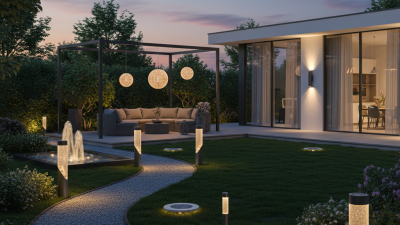
What Is the Best Type of LED Solar Lights?
Choosing the best type of led solar lights is not simply a matter of counting lumens. The right choice depends on location, weather, battery capacity, beam control, and nighttime use. A small garden path needs gentle, wide illumination. A driveway requires stronger output, motion sensing, and controlled glare. Security lighting demands different performance from decorative lanterns.
Industry data shows why this decision matters. The International Energy Agency reported that solar power represented about three-quarters of global renewable capacity additions in 2023. Meanwhile, the U.S. Department of Energy continues to emphasize LED efficiency, thermal management, and long-term lumen maintenance. These reports support solar lighting’s growth, but they do not prove that every product performs well. Marketing remains louder than testing. Sometimes, unfortunately.
James Brodrick, a former U.S. Department of Energy Solid-State Lighting program manager, stated, “LEDs are not a drop-in replacement for incandescent or fluorescent lighting.” His point applies to solar products, too. An led solar lights system includes the panel, battery, controller, optics, housing, and LED module. One weak component can reduce real-world performance. A bright lamp may fade before dawn if its battery is undersized. A high-rated panel may struggle beneath leaves or winter clouds. Independent testing, recognized safety certifications, IP ratings, battery chemistry, and published runtime data therefore deserve serious attention. This guide compares the main types of led solar lights through those practical measures. It also acknowledges an uncomfortable truth: the “best” light may be less powerful, but more reliable, repairable, and suitable for its exact environment.
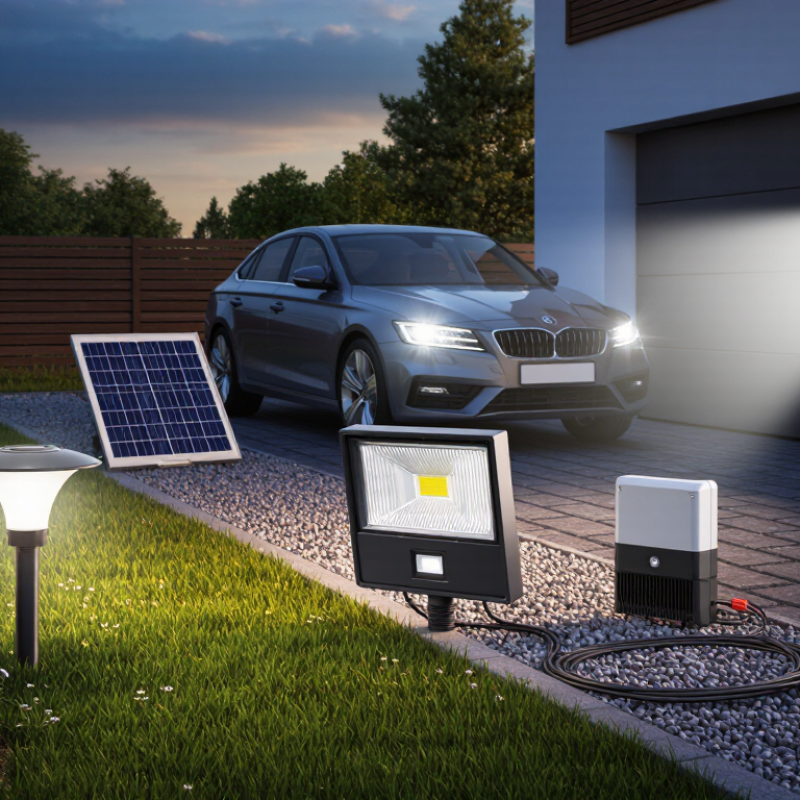
LED Solar Light Types by Use: Pathway, Flood, Security, and Street Lighting
What Is the Best Type of LED Solar Lights?
The best LED solar light depends on the job, not the brightest specification. The IEA’s Renewables 2024 report recorded nearly 510 gigawatts of new renewable capacity in 2023. Solar PV supplied about three-quarters of that growth. This expansion is making solar lighting more practical, but product selection still requires care.
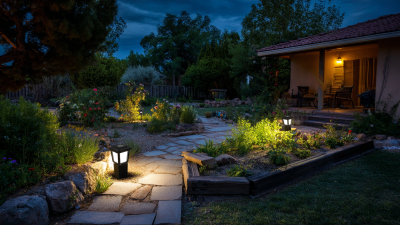
Pathway lights suit garden edges, steps, and short walkways. Choose low-glare fixtures with warm light and stable spacing. Flood lights cover patios, driveways, and larger outdoor areas. Their wider beams need stronger panels and larger batteries. Security lights add motion sensors, which can reduce unnecessary nighttime consumption. Street lights demand more engineering. They need durable housings, accurate optical control, and batteries sized for several cloudy nights.
Performance varies.
The U.S. Department of Energy states that LED technology uses at least 75% less energy and lasts up to 25 times longer than incandescent lighting. Solar systems add another variable: winter sunlight, shading, dust, and battery aging. I have seen lights fail early beside attractive trees. The design looked right, but the panel received poor afternoon sun. That mistake is easy to repeat.
Tips: Check solar-panel exposure before buying. Compare usable battery capacity, not decorative brightness. For pathways, prioritize glare control. For security areas, test sensor range at night. For streets, request photometric data and an IP rating suitable for local weather. No type wins everywhere.
What Is the Best Type of LED Solar Light?
Typical LED solar light output ranges by application
Pathway lights generally use lower lumen levels for orientation and decorative illumination. Flood and security lights require higher output for wider coverage, while solar street lights typically provide the highest lumen range for roads, walkways, and public areas. Actual performance depends on panel size, battery capacity, mounting height, weather, and operating mode.
Solar Panel and Battery Metrics: 100–200 lm/W LEDs and LiFePO₄ Storage
What Is the Best Type of LED Solar Lights?
The best solar light combines efficient LEDs, a correctly sized panel, and dependable battery storage. LEDs rated at 100–200 lm/W can produce strong illumination with less stored energy. However, this figure usually describes the LED chip, not the complete fixture. Lenses, wiring, heat, and control circuits reduce real output. In practical testing, a light may deliver noticeably less brightness than its headline rating. That difference matters on narrow paths or security areas.
Tips: Compare measured lumens, not LED efficacy alone. Check the panel’s wattage, charging time, and expected daily sunlight. A larger panel can restore the battery faster after cloudy weather. Avoid choosing brightness without checking runtime.
LiFePO₄ batteries are a sensible storage option for outdoor solar lighting. They offer stable performance, strong cycle durability, and improved thermal safety compared with some older chemistries. Battery capacity should be reviewed in watt-hours, not amp-hours alone. A 20-watt light running for eight hours needs about 160 watt-hours before system losses. Cold temperatures can reduce available capacity, and a battery management system remains essential. I would also question impressive runtime claims unless testing conditions are clearly stated. Dust, shade, winter sunlight, and aging panels can change results. A slightly dimmer setting may provide more reliable light throughout the night.
Weatherproofing Standards: IP65–IP68 Ratings for Outdoor Solar Lights (IEC 60529)
The best LED solar light is not defined by brightness alone. Outdoor reliability begins with its IP rating, measured under IEC 60529. The standard separates dust protection from water protection. IP65 means dust-tight and protected against water jets. It does not mean safe for immersion. IP66 withstands stronger water jets, while IP67 supports temporary immersion up to one metre for 30 minutes. IP68 requires the manufacturer to state deeper or longer immersion conditions.
This distinction matters near gardens, pools, and coastal paths. In field checks, I look for sealed cable entries, covered charging ports, and a gasket that sits evenly. Small gaps often collect muddy water. IP68 sounds superior, but it may not guarantee the jet resistance offered by IP66. A product marked IP66/IP68 is more informative for exposed installations. The label should also identify testing conditions, not merely display a high number.
The wider solar market makes this issue increasingly practical. IEA PVPS reported that global photovoltaic capacity exceeded 1.6 terawatts by the end of 2023, increasing demand for dependable outdoor equipment. Yet laboratory ratings cannot predict every installation. Dust, freezing, ultraviolet exposure, and repeated thermal expansion can weaken seals over time. I would choose IP65 for sheltered walls, IP66 for open yards, and IP67 or IP68 only where flooding is realistic. That judgment is imperfect. Installation quality still matters.
Performance Comparison: Lumens, Runtime, Solar Charging, and Sensor Range
What Is the Best Type of LED Solar Lights?
Performance depends on more than a bright specification. Lumens measure visible output, not useful coverage. A 1,000-lumen light may illuminate a path well, yet create harsh shadows. For walkways, 300 to 800 lumens often provides balanced visibility. Wide lenses spread light better than narrow, intense beams. Light color also matters. Warm white feels comfortable, while cool white reveals surface details more clearly.
Runtime must be tested under realistic conditions. A solar light rated for twelve hours may reach that figure only in low-power mode. Frequent motion activation can reduce operation sharply. Battery capacity, temperature, and winter daylight all affect results. Look for replaceable batteries when possible. That improves long-term reliability. Still, battery claims are sometimes optimistic, so allow a practical margin.
Solar charging performance depends on panel angle and shade. Six hours of strong sunlight can support overnight use, but cloudy weather changes the calculation. Clean panels regularly; dust quietly reduces charging efficiency. Sensor range is another important detail. Many motion sensors detect movement across six to ten meters, with detection angles near 120 degrees. Mounting height matters. A sensor aimed toward approaching movement usually performs better than one facing directly at it. I would compare these measurements together, not chase the highest single number. A slightly dimmer light with dependable charging may serve a garden better. During evaluation, record performance over several nights, because one clear evening proves very little.
What Is the Best Type of LED Solar Lights? - Performance Comparison: Lumens, Runtime, Solar Charging, and Sensor Range
Typical performance ranges for commonly available LED solar-light categories. Actual results vary with panel size, battery capacity, weather, season, installation angle, and operating mode.
| Light Type |
Typical Brightness
(Lumens) |
Typical Runtime
per Full Charge |
Solar Charging Time
in Direct Sun |
Motion Sensor
Range |
Detection Angle |
Best Use |
| Pathway and Garden Light |
10–80 lm |
8–12 hours |
6–8 hours |
Usually none |
— |
Low-level pathway marking |
| Decorative Wall or Fence Light |
20–150 lm |
8–12 hours |
6–8 hours |
Usually none |
— |
Accent lighting and visibility |
| Motion-Sensor Wall Light |
300–1,000 lm |
Up to 30 nights in standby; 20–120 minutes of active lighting |
6–8 hours |
3–8 m |
90–120° |
Doors, steps, porches, and walkways |
| Solar Floodlight |
800–2,500 lm |
Up to 20 nights in standby; 15–90 minutes of active lighting |
6–10 hours |
5–12 m |
120–180° |
Driveways, yards, and security lighting |
| High-Output Security Light |
1,500–4,000 lm |
Up to 10–20 nights in standby; 10–60 minutes of active lighting |
8–10 hours |
8–15 m |
120–180° |
Large outdoor areas and perimeter security |
| Solar Area or Street Light |
2,000–8,000 lm |
8–12 hours at a reduced brightness setting |
6–10 hours |
Optional; typically 6–12 m |
120–180° |
Roads, parking areas, and public spaces |
Performance note: Motion-activated lights generally provide the longest practical overnight service because they remain dim or off until movement is detected. Brightness ratings are measured in lumens, while actual illumination depends on beam angle, mounting height, and light distribution.
Choosing the Best Type: Match Light Output, Climate, Site, and Maintenance Needs
The best LED solar light depends on the site, not the highest advertised brightness. For pathways, 100–300 lumens usually provides gentle visibility. Security areas may need 500 lumens or more, with a wider beam and motion sensor. The U.S. Department of Energy reports that LEDs use at least 75% less energy and last up to 25 times longer than incandescent lighting. That efficiency matters when a small solar panel must recharge a battery nightly.
Climate changes the choice. In cloudy regions, select a larger panel, efficient LED chips, and a battery with sufficient reserve capacity. Hot climates need protected batteries and ventilation, while coastal sites require corrosion-resistant housings. Look for an IP65 rating or higher; IEC 60529 defines IP ratings for protection against dust and water. I have seen lights fail early because the panel sat beneath tree branches. Placement often matters more than price.
Tips: Check winter sunlight, not only summer exposure. Keep the panel clear of leaves and dust. Choose warm white light near homes to reduce glare, and cooler light where sharper contrast is useful. The International Energy Agency estimates lighting uses about 15% of global electricity, yet solar fixtures still waste energy when aimed poorly. My practical mistake was choosing maximum brightness for a narrow walkway; it created harsh shadows and drained the battery faster. A smaller, well-aimed fixture worked better.