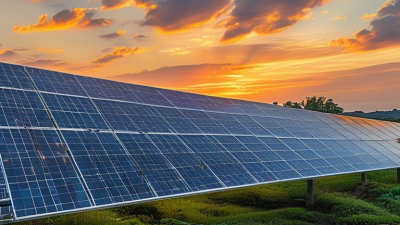
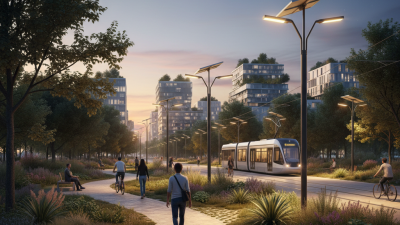
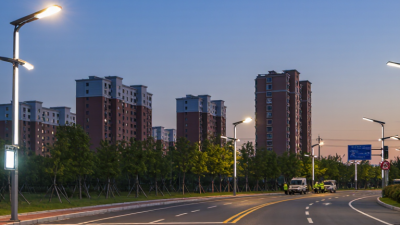
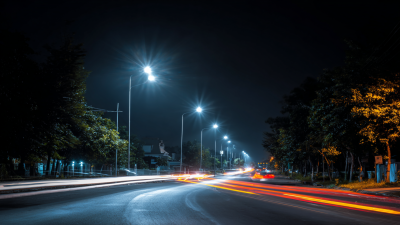
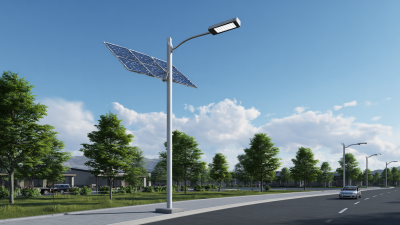
Choosing the best solar led street light requires more than comparing prices or advertised wattage. A reliable choice begins with the site itself. Observe road width, nighttime traffic, tree cover, soil conditions, and seasonal sunlight. A light installed beside tall buildings may receive less energy than product brochures suggest. This detail is easy to overlook.
Performance depends on several connected parts. Check the panel type, battery chemistry, LED efficiency, controller quality, pole height, and lighting distribution. A bright lamp is not automatically a suitable lamp. Its battery should support several cloudy nights, while its charging system must match local sunlight patterns. Look for clear data on lumen output, operating hours, protection ratings, and expected service life. Independent testing or recognized certification can strengthen confidence, although certification alone cannot replace a site assessment.
Practical experience also matters. Inspect how the battery compartment opens, whether cables are protected, and how easily technicians can replace components. In remote areas, simple maintenance may be more valuable than advanced features. Motion sensors and dimming controls can reduce energy use, but poor settings may create dark gaps for pedestrians or drivers.
No product is perfect. A supplier may provide impressive laboratory figures, yet real roads bring dust, rain, heat, and accidental damage. Ask for installation records, warranty conditions, spare-part availability, and measurable performance evidence. Compare the total cost over several years, not only the purchase invoice. Careful selection is sometimes slower. It is usually safer, more economical, and more responsible.
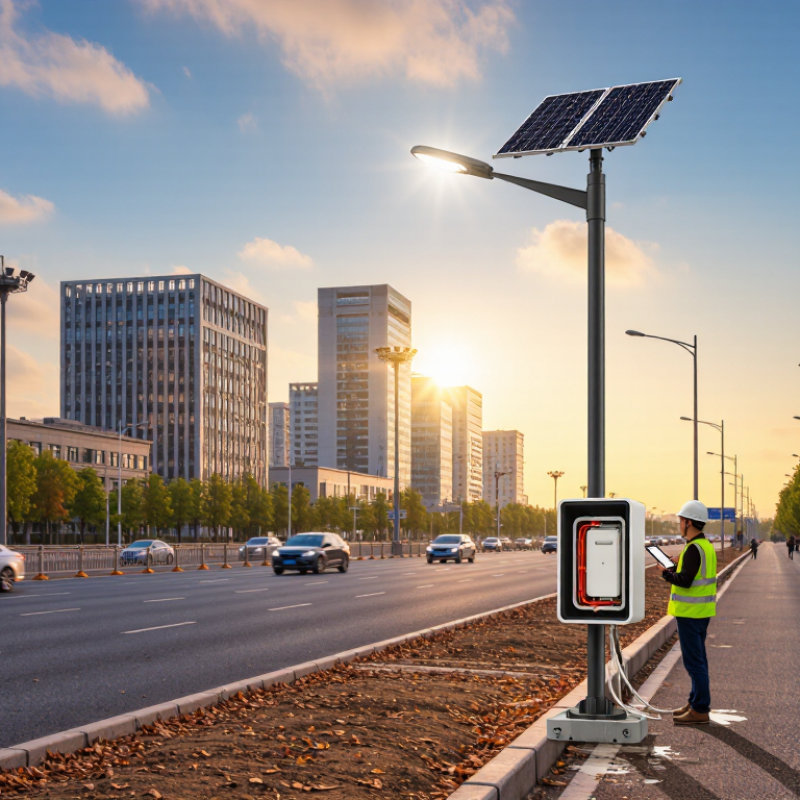
How to Choose the Best Solar LED Street Light?
Defining the road or public area’s lighting needs comes before selecting panels, batteries, or fixtures. Record traffic speed, road width, pedestrian activity, and nearby buildings. A quiet pathway needs a different design from a busy junction. The CIE 115:2010 standard recommends different lighting classes for vehicle roads, conflict areas, and pedestrian spaces. These classes consider luminance, illuminance, uniformity, and glare.
Use measurable targets. EN 13201-2:2015 lists an M2 road class at 1.5 cd/m² maintained luminance and 0.4 overall uniformity. For a lower-use pedestrian route, the P4 class commonly requires 5 lux average illuminance and 1 lux minimum illuminance. These figures are not decorative targets. They help engineers calculate mounting height, pole spacing, beam angle, and acceptable dark spots. In field assessments, uneven lighting often creates more concern than low average brightness. One bright pool is not enough.
Solar design must reflect real local conditions. The World Bank’s Global Solar Atlas provides monthly solar-resource data, which is more useful than annual averages alone. Size the system for the weakest season, then include battery autonomy for cloudy nights. The U.S. Department of Energy’s solid-state lighting reports show that modern LED products can exceed 150 lumens per watt, but efficiency alone cannot solve poor spacing or glare. A spreadsheet may appear precise. It can still miss tree growth, dust, flooding, or seasonal pedestrian changes. Recheck the site after installation, because the first design may be technically correct yet practically uncomfortable.
How to Choose the Best Solar LED Street Light?
Compare Solar LED Street Light Types and System Configurations
Choosing the best solar LED street light starts with matching the design to the site. An all-in-one unit combines the panel, battery, controller, and lamp in one housing. It suits narrow roads, walkways, and areas needing simple installation. However, heat buildup can reduce battery life in poorly ventilated housings. A split-type light places the solar panel above or beside the lamp. This layout improves panel positioning and supports larger batteries for longer autonomy. It also requires stronger cable protection. Not always.
System configuration matters more than appearance. A basic system includes a photovoltaic panel, charge controller, battery, LED module, and pole bracket. Lithium batteries usually provide better cycle life and compact storage. Lead-acid batteries may cost less, but they need more space and careful maintenance. Use measured solar radiation data, not only regional averages, when sizing the panel. Add motion sensors or scheduled dimming where traffic changes during the night. These controls can reduce energy demand, but incorrect settings may create dark periods.
Site conditions should guide the final comparison. Check shade from trees, dust, wind exposure, drainage, and pole spacing. A higher-power lamp is not automatically better. Excessive brightness can waste energy and disturb nearby homes. Review lighting uniformity, battery autonomy, ingress protection, and controller safeguards. Ask for test records and clear warranty terms. A small pilot installation can reveal glare, shadowing, and charging problems before full deployment. Field measurements often challenge the original design. That is useful.
| Solar LED Street Light Type | Main System Configuration | Typical LED Power | Typical Battery Technology | Typical Autonomy | Best-Suited Applications | Key Advantages | Main Limitations | Important Selection Factors |
|---|---|---|---|---|---|---|---|---|
| All-in-One Solar Street Light | Solar panel, LED lamp, battery, controller, and sensor integrated into one housing | 20–80 W | LiFePO4 lithium battery is commonly used | 2–5 nights, depending on battery capacity and operating profile | Residential streets, parks, footpaths, parking areas, and small access roads | Compact appearance, simplified installation, minimal external wiring, and lower risk of cable damage | Limited flexibility for changing panel angle, battery size, or LED output after installation | Check solar-panel area, battery capacity, thermal management, mounting orientation, and replacement access |
| Split-Type Solar Street Light | Solar panel, battery, and LED luminaire are installed as separate components | 30–150 W | LiFePO4 or sealed lead-acid battery | 2–7 nights, depending on the selected battery bank | Roads, rural routes, larger parking areas, and sites requiring higher energy capacity | More flexible panel positioning, easier component replacement, and greater sizing freedom | More installation work, additional cabling, and greater exposure to connection or weather-sealing issues | Evaluate cable length, voltage drop, waterproof connectors, battery enclosure, and protection against theft or vandalism |
| Solar LED Light with Motion Dimming | Solar system with programmable LED output and passive infrared or microwave motion detection | 20–100 W | Usually LiFePO4 lithium battery | 2–6 nights, often extended by reduced output during low traffic | Pedestrian paths, residential roads, cycleways, and low-traffic areas | Reduces energy consumption during quiet periods and can increase operating reliability in poor weather | Incorrect sensor positioning may cause false triggering, delayed response, or uneven lighting | Set standby brightness, full-brightness duration, detection range, mounting height, and sensitivity carefully |
| High-Output Solar Street Light | Larger panel and battery system paired with a higher-power LED luminaire | 80–200 W | Large LiFePO4 battery bank or other deep-cycle storage system | 2–5 nights, subject to high daily energy demand | Main roads, wide streets, intersections, industrial access roads, and areas needing higher illuminance | Supports wider road coverage and higher light output when correctly designed | Higher initial cost, larger pole loads, increased wind exposure, and greater sensitivity to poor solar resources | Confirm photometric distribution, pole spacing, wind loading, panel size, battery reserve, and road-class requirements |
| Solar Street Light with Remote Monitoring | Solar lighting system with a controller, communication module, and cloud or network-based monitoring | 30–150 W | LiFePO4 lithium battery is commonly selected | 2–7 nights, depending on system capacity and dimming schedule | Municipal roads, campuses, smart-city projects, and large distributed installations | Enables fault alerts, battery-status checks, energy monitoring, and schedule management | Requires communication coverage, compatible software, cybersecurity controls, and ongoing service support | Review network availability, data costs, control functions, access permissions, and long-term software support |
| Hybrid Solar-Grid LED Street Light | Solar generation and battery storage combined with a utility-grid backup connection | 40–180 W | LiFePO4, lead-acid, or another appropriately rated stationary battery | Usually 1–3 nights from battery storage, with grid backup available | Urban roads, critical intersections, security areas, and sites where uninterrupted lighting is important | Higher availability during extended cloudy periods and smaller solar-storage requirements than a fully off-grid system | Requires grid access, electrical protection, qualified installation, and compliance with local regulations | Compare grid reliability, electricity tariffs, backup logic, transfer controls, grounding, and maintenance requirements |
| Solar Bollard or Low-Height Path Light | Compact solar module, battery, LED source, and controller integrated into a low-height fixture | 3–20 W | Small lithium battery or rechargeable nickel-metal hydride battery | 1–3 nights, depending on operating hours and solar exposure | Gardens, walkways, landscaped areas, resorts, and pedestrian zones | Low installation height, simple deployment, low power consumption, and minimal visual impact | Limited illumination range, greater risk of shading, and increased vulnerability to impact or theft | Check pedestrian safety, vandal resistance, shadowing from trees or buildings, spacing, and required path visibility |
How to Choose the Best Solar LED Street Light?
Choosing the best solar LED street light starts with usable brightness, not advertised wattage. Field audits often find high lumen claims paired with narrow beams and dark walkways. Specify maintained illuminance, distribution, and glare control for the actual road width. For pedestrian routes, uniform light can outperform a brighter fitting with harsh shadows. Request LM-79-style photometric data, installation height, spacing, and light-loss assumptions. The U.S. Department of Energy’s Energy Savings Forecast report projected LED system efficacy could approach 180 lumens per watt by 2035. Treat that as a benchmark, not a promise. Real output falls with heat, dust, aging, and optics.
Battery capacity must cover local night length, weather, and control settings. Calculate demand by multiplying wattage by operating hours, then adding conversion losses. A 40-watt lamp running 12 hours needs 480 watt-hours before losses. Three autonomy nights require roughly 1.44 kilowatt-hours. Usable capacity still depends on battery chemistry and discharge limits. The calculation is imperfect. Cold temperatures can expose that mistake. Panel performance deserves equal scrutiny. The Fraunhofer Institute’s Photovoltaics Report 2024 places typical commercial crystalline-silicon module efficiency around 20–23%. That figure uses standard test conditions. Shade, dust, heat, and poor orientation reduce daily harvest. The IEA PVPS Trends 2024 report recorded more than 400 gigawatts of new solar capacity in 2023. That growth shows scale, not guaranteed site performance. Ask for measured winter yield.
Compare the typical brightness, battery storage, and solar panel output of four practical street-light configurations. Higher brightness improves road coverage, while greater battery capacity supports longer operation during cloudy weather. A larger solar panel can restore more energy during daylight hours.
Material quality affects service life more than appearance. Choose corrosion-resistant aluminum, tempered glass, and sealed battery compartments. LiFePO4 batteries usually tolerate frequent cycling better than basic lithium cells.
The U.S. Department of Energy reports that LED roadway lighting can reduce energy use by roughly 50–70% compared with conventional systems. However, poor thermal design can shorten LED life. A bright lamp is not always a durable lamp.
Weather resistance needs measurable proof. Look for at least IP65 protection against dust and water jets. In coastal areas, stronger corrosion testing is essential. Check the operating temperature range, wind-load rating, and impact resistance.
The IEC 60529 standard defines IP protection levels, but suppliers sometimes present ratings without test details. That deserves careful questioning.
Controls also matter. Motion sensors, dimming schedules, and remote monitoring can reduce wasted energy. The International Energy Agency’s Renewables 2024 report confirms solar PV remains the fastest-growing renewable power source, but local sunlight still determines performance.
Tips: Request a lighting simulation for the exact road width, pole spacing, and winter solar conditions. Confirm autonomy for several cloudy nights. Inspect battery replacement access.
Installation mistakes happen. A shaded panel, incorrect tilt, or weak foundation can undermine an otherwise excellent product. Review cable protection, grounding, and maintenance access before approval.
Choosing the best solar LED street light starts with total cost, not purchase price. The U.S. Department of Energy reports that LED lighting can use at least 75% less energy than incandescent lighting and last up to 25 times longer. Yet solar systems add batteries, controllers, panels, poles, installation, and remote monitoring. Build a five-year cost model. Include battery replacement, cleaning, transport, and possible theft or storm damage.
Battery quality deserves close inspection. Ask for cycle-life data at the local temperature, not only laboratory figures. A hot coastal site can age batteries faster than expected. The International Energy Agency identifies battery storage as a key cost and reliability factor in solar applications. Panel output also declines gradually. NREL field research commonly reports photovoltaic degradation near 0.5% annually, though actual results vary by climate and product quality.
Warranty wording reveals practical reliability. Check whether it covers the battery, controller, panel, LED module, and labor separately. A two-year lamp warranty may hide a one-year battery warranty. That is a warning. Request test reports aligned with IEC 60598, IEC 62133, and relevant ingress-protection standards. Lighting Global and GOGLA quality frameworks also emphasize verified performance and after-sales support. Inspect one installed unit at night, after several cloudy days. It may look excellent on paper. Field evidence is harder to fake. Allow a maintenance budget, because even a reliable light is not maintenance-free.