Why Choose LED Panel Lights for Your Business?

Choosing the right lighting affects more than visibility. It influences employee comfort, product presentation, energy use, and daily operating costs. For many businesses, led panel lights offer a practical alternative to older fluorescent fixtures.

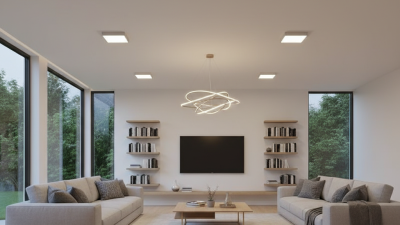
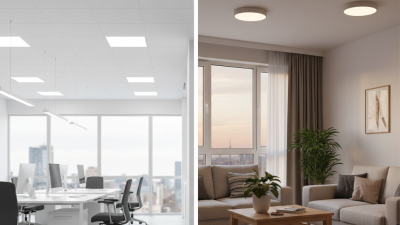
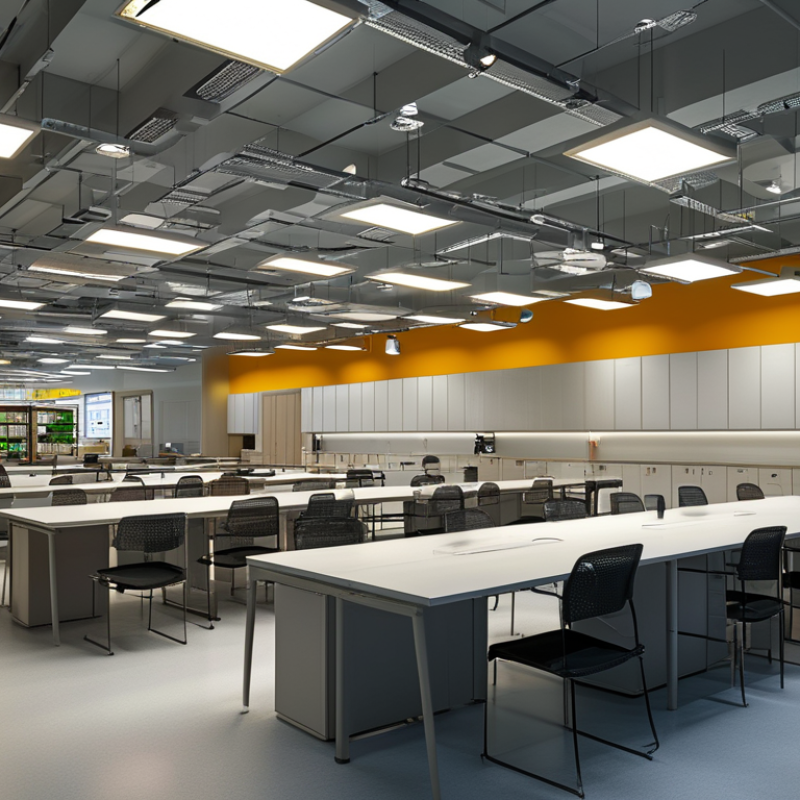
Their slim design creates an even spread of light across offices, retail floors, classrooms, and healthcare spaces. Dark corners become less distracting. Glare can also be reduced when the correct beam angle, color temperature, and diffuser are selected. A facilities manager may notice the difference during a long inspection shift, especially beneath consistent, flicker-controlled illumination.

However, led panel lights are not a universal solution. Poor-quality products may show uneven brightness, weak heat management, or early driver failure. This is where professional evaluation matters. Buyers should review verified efficiency data, color rendering performance, warranty terms, and relevant safety certifications. Installation quality deserves equal attention, because wiring and ceiling compatibility affect reliability.

The best choice depends on the room, operating schedule, and maintenance plan. A small office may need soft, neutral light, while a warehouse may require stronger output and wider coverage. Measuring the space before purchasing prevents expensive guesswork. It is a simple step.

Real-world experience suggests that long-term value comes from balanced decisions, not the lowest initial price. Businesses should compare total ownership costs, expected service life, and replacement access. With careful selection and proper installation, led panel lights can support a cleaner, more efficient, and dependable working environment. Yet every project should be reviewed honestly, because lighting needs change over time.
Why Choose LED Panel Lights for Your Business?

LED Panel Light Technology: How Edge-Lit and Back-Lit Designs Work

Why Choose LED Panel Lights for Your Business?

LED panel lights use two main optical layouts: edge-lit and back-lit. Edge-lit panels place LEDs along the frame, guiding light through a thin diffuser. This creates a slim, clean ceiling profile.

Back-lit panels position LEDs behind the diffuser, allowing more direct light distribution. They usually need greater depth, but can offer stronger uniformity and simpler optical control.

The U.S. Department of Energy’s 2019 Energy Savings Forecast projected LED efficacy could reach 150 lumens per watt by 2035. That figure matters in offices, schools, and retail spaces with long operating hours. The International Energy Agency also reports that LED lighting can use at least 75% less electricity than incandescent lighting. Still, efficiency alone does not guarantee comfort.

In my project experience, edge-lit models fit shallow ceilings and tight renovation spaces.

However, poor diffusion can create bright borders or faint center shadows. Back-lit designs often reduce that risk. They may also tolerate higher output without pushing heat toward the frame.

Check UGR, uniformity, color consistency, and driver quality before comparing wattage. A panel can look efficient on paper, yet feel harsh at a desk. That trade-off is easy to underestimate.

Energy Savings Explained: DOE Reports LEDs Use at Least 75% Less Energy

Why Choose LED Panel Lights for Your Business?

Energy efficiency is a major reason businesses replace older ceiling fixtures with LED panel lights. The U.S. Department of Energy reports that LEDs use at least 75% less energy than incandescent lighting. That difference can reduce monthly electricity costs in offices, schools, clinics, and retail spaces. LEDs also produce less heat, which may reduce cooling demand during warmer months.

The real savings depend on usage. A panel operating for ten hours daily can consume far less energy than an older fixture with similar brightness. Longer service life may also reduce ladder work, replacement purchases, and interruptions. However, an estimate can be misleading if it ignores electricity rates, fixture quantity, or installation costs. Poorly planned layouts may require more panels than expected. Measure the space carefully. Check brightness, glare, color temperature, and compatibility with existing controls. Professional guidance helps, especially during large retrofits.

Tips: Compare wattage before and after installation. Calculate savings using actual operating hours. Choose occupancy sensors for rooms used occasionally. Keep a small maintenance record. It reveals whether projected savings match real performance. Some assumptions will need correction. That is normal. Reliable decisions come from measured results, not attractive promises.

Service Life and Maintenance: LEDs Can Last Up to 25 Times Longer

LED panel lights can offer a service life of up to 25 times longer than traditional incandescent lighting. The exact figure depends on the product, operating temperature, driver quality, and daily usage. In a busy office, lights may run for ten hours each weekday. Fewer replacements can reduce ladder work, labor costs, and interruptions for employees. That changes the schedule. Facility teams can spend less time replacing failed lamps and more time checking safety systems. A well-designed panel also provides steady illumination across desks, corridors, and meeting rooms. Flicker, glare, and uneven brightness still require careful evaluation.

Long life does not mean maintenance is zero. Dust can collect on the diffuser, especially in workshops, warehouses, and high-traffic stores. Cleaning the panel during routine inspections helps preserve light output. Ventilation matters too, because excessive heat can shorten the life of LEDs and their electronic drivers. In real installations, the driver may fail before the LED modules. This detail is easy to overlook. Selecting replaceable components and keeping installation records can make future repairs less disruptive. The “25 times longer” statement should be treated as a maximum, not a promise for every building. Reviewing operating hours, room temperature, switching frequency, and warranty conditions creates a more reliable estimate. I have seen maintenance plans fail because they assumed LEDs needed no attention. That assumption deserves reconsideration.

Lighting Quality for Workplaces: CRI 80+ Supports Professional Visual Tasks

Why Choose LED Panel Lights for Your Business?

Workplace lighting must reveal detail without creating visual strain. A panel light with CRI 80+ can render skin tones, printed charts, product colors, and wiring more naturally. The CIE defines CRI as a color-fidelity measure, while IES guidance treats 80+ as a practical baseline for many indoor work areas. It is not perfect. Deep reds may still look slightly muted.

That difference matters around a drafting table. White paper should look neutral, not gray. Colored safety labels should remain easy to distinguish. The U.S. Department of Energy reports that LED lighting can use up to 75% less energy and last up to 25 times longer than incandescent lighting. The International Energy Agency also estimates lighting uses about 15% of global electricity. Better efficiency helps, but poor color quality can still undermine professional work.

Choose panels with measured CRI data, controlled glare, and even illumination across the desk. A high CRI alone cannot fix flicker, harsh shadows, or excessive brightness. EN 12464-1 commonly uses Ra 80 as a minimum for office environments, yet some design tasks may benefit from higher color fidelity. Real spaces are messier than specifications. Test samples beside documents, screens, and materials before large-scale installation.

Why Choose LED Panel Lights for Your Business?

Recommended maintained illuminance for common workplace visual tasks, with CRI Ra ≥ 80 supporting accurate and professional visual work.

Recommended illuminance levels vary by activity: office and meeting-room tasks commonly use around 500 lux, while precision drawing may require approximately 750 lux. A CRI of 80 or higher helps render workplace colors more naturally for reading, documentation, design, and general visual tasks. Always confirm requirements against applicable local lighting standards.

Business Payback Factors: Compare Energy, Replacement, and Maintenance Costs

Why Choose LED Panel Lights for Your Business?

A payback review should begin with measured operating hours, not optimistic catalog claims. The U.S. Department of Energy reports that quality LED products can reach 25,000 hours or more, reducing relamping frequency. Consider 100 panels running 4,000 hours yearly. Replacing 72-watt fluorescent fixtures with 40-watt LED panels saves about 12,800 kilowatt-hours annually. At $0.15 per kilowatt-hour, that equals approximately $1,920 in yearly energy savings.

Energy is only one line item. Replacement lamps, lift access, disposal, and technician time can quietly enlarge fluorescent maintenance costs. The U.S. Environmental Protection Agency’s ENERGY STAR guidance emphasizes longer LED life and lower energy use, but actual results depend on product quality and operating conditions. Heat, dust, frequent switching, and poor ventilation can shorten service life. Real buildings are less predictable.

A proper comparison should include controls, warranty terms, installation labor, and projected electricity prices. The DOE’s Solid-State Lighting research reports identify efficacy and controls as important efficiency opportunities. Occupancy sensors may reduce runtime further, especially in storage rooms and meeting spaces. However, controls can add commissioning work. That cost is easy to overlook. A simple spreadsheet should show annual kilowatt-hours, replacement intervals, labor rates, and disposal charges. It should also test a pessimistic case, such as 20% fewer operating hours or higher installation costs. The result may still support LED panels, but not every room deserves the same specification.

Why Choose LED Panel Lights for Your Business? - Business Payback Factors: Compare Energy, Replacement, and Maintenance Costs

Ten-year planning comparison for a 100-fixture commercial lighting installation using LED panels versus fluorescent ceiling fixtures.

Business Payback Factor LED Panel Lighting Fluorescent Baseline Business Impact
Operating Assumptions
Number of fixtures 100 fixtures 100 fixtures Same lighting quantity and operating schedule for a fair comparison.
Connected load per fixture 40 W 72 W, including typical ballast losses LED panels require less electricity for a comparable general-office lighting application.
Operating schedule 12 hours per day, 260 days per year 12 hours per day, 260 days per year 3,120 operating hours per year.
Electricity rate used $0.15 per kWh $0.15 per kWh Actual savings will vary by utility tariff, demand charges, and location.
Energy Cost Comparison
Annual electricity consumption 12,480 kWh for 100 fixtures 22,464 kWh for 100 fixtures LED lighting uses approximately 44% less electricity in this example.
Annual electricity cost $1,872 $3,370 Estimated annual energy saving: $1,498.
Ten-year electricity cost $18,720 $33,696 Estimated ten-year energy saving: $14,976 before utility-rate changes.
Replacement and Maintenance Costs
Rated service life used for planning 50,000 operating hours 20,000 operating hours for lamps At 3,120 hours per year, LED panels may operate for approximately 16 years before reaching the stated rated life.
Typical installed replacement cost per fixture $180 $140 Planning values include fixture, basic materials, and installation labor; local quotes may differ.
Expected replacement events within 10 years Normally no full-fixture replacement Approximately 1.5 lamp-life cycles Fluorescent systems generally require more frequent lamp replacement and may also require ballast service.
Ten-year replacement reserve $11,232 $21,840 Calculated as installed fixture cost × 31,200 operating hours ÷ rated service life; this is a planning reserve, not a guaranteed invoice.
Estimated annual maintenance cost $600 $2,000 Estimated annual maintenance saving: $1,400, mainly from fewer lamp changes and less access equipment or labor.
Ten-year maintenance cost $6,000 $20,000 Estimated ten-year maintenance saving: $14,000.
Investment and Payback
Initial installation cost $18,000 $14,000 LED installation premium in this example: $4,000.
Combined annual operating saving $2,898 Energy saving of $1,498 plus estimated maintenance saving of $1,400.
Simple payback period for the LED premium Approximately 1.4 years Calculated as $4,000 additional investment ÷ $2,898 annual operating saving.
Estimated ten-year operating cost $24,720 $53,696 Includes electricity and estimated maintenance, excluding financing, taxes, rebates, and inflation.
Estimated ten-year operating-cost advantage $28,976 Potential ten-year advantage after comparing energy and maintenance costs; replacement reserve is shown separately above.
Planning note: The figures are realistic illustrative assumptions for a commercial facility and are not tied to any company or brand. Actual results depend on fixture output, lighting controls, operating hours, electricity prices, labor rates, ceiling access, lamp disposal requirements, and local rebates. A site-specific audit should confirm light levels and installation costs before purchase.
has been added to your cart.
Checkout